Help & advice
Which is the right extractor fan to choose for my bathroom?
Last updated: March 02, 2026
This is another one of those decisions that you can find yourself in a black hole of technical details about on the internet when you suddenly need to make that decision. Ready for that day (or now that you know, earlier) we've summarised the trade offs you'll need to make when it comes to deciding on an extractor fan:
First off, do I have to have an extractor fan in my bathroom?
Not always, no, but you should get one anyway! In older properties in the UK there is no legal requirement to install an extractor fan (even though it's a good idea to avoid mould, condensation build up, and reduce odours) however you absolutely do need some form of ventilation i.e. a window. New builds have to have an extractor fan, even if there is a window.
An extractor fan will save you money and energy in the long run compared to opening a window all the time, constantly letting hot air out and cold air in.
Where will it go?
Your extractor fan should be high up your wall or in the ceiling because hot, humid air rises, and placed outside of the bathroom electrical zones.
When it comes to fitting an extractor fan into your bathroom renovation plan, having one placed above your bath or shower would be a great way to remove steam quickly. They exist with lights built in too!
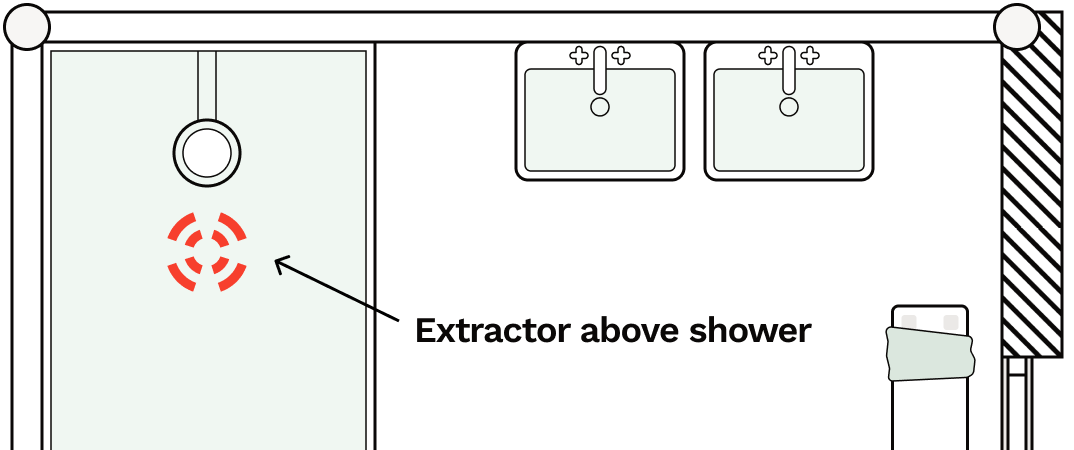
Bathroom against an external wall? Putting your extractor fan on the external wall will be cheapest and easiest for installation.
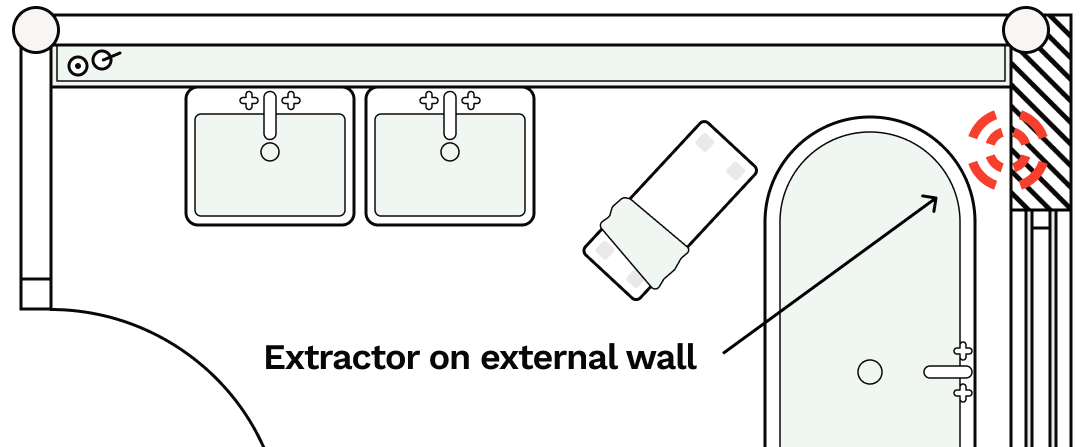
Bathroom not near an external wall? Or is the shower quite a distance from it? You'll need to route the extraction through some ducting. Fun!
And that brings us to which type of extractor fan works best for your bathroom plan
Where you are putting your extractor fan will determine the type you need to buy so with any luck you won't need to get this far into the technical details, but here's the low down detail:
Axial
Most common for wall installations. Why the name? Because air is moved along the axis of rotation in a straight line, pulling air in and pushing it out in a straight line - designed to be mounted directly into an external wall, because there's only a short distance the air needs to be pushed along.
Inline mixed flow
An inline mixed flow extractor fan is what you are going to be looking at if you want to have it hidden in your ceiling. A more complicated design that can push that air further, not only in a straight line i.e. from your bathroom to the outside along a duct run. More powerful, so used to carry moisture and odours over extra long distances.
Centrifugal
Also for use with ducting, centrifugal fans apply centrifugal force to move air outward from the center of the fan to the edges, making them great at handling complicated ducting runs and redirecting airflow. They can be a bit chunky in terms of their design, but shop around!

Extraction rate
The minimum ventilation requirements for a bathroom are 15 litres per second/ 54m3 per hour - pretty much standard for bathroom extractor fans to meet these requirements, but check before you buy.
Noise
Look for a low db rating, we've seen fans around 15db - 25db which is super quiet! You do even get app controlled fans so you could set things like, don't come on when your partner gets up to use the bathroom in the middle of the night.
Sizes are limited
UK bathrooms are tight on space so as much as this might not feel important right now, it's worth knowing the exact dimensions of your extractor fan (we luckily *just* had space for a 150mm fan last time we did a bathroom taking into account the window frame). Extractor fans are most typically 150mm wide (6 inches) in terms of what takes up the space on your wall, not just the 'spigot'.

Pull a cord or turn on with the lights? Humidity sensor or timer? Both?
Pull cord extractor fans are those that have a cord for manually turning the fan on or off. Main disadvantage is you have to remember to use it.
Switch operated means that your fan will come on with your light switch (most common, avoiding the issue of forgetting!). Insider tip, this won't typically work with a dimmer switch if that was on your agenda you'll need to discuss with an electrician.
Timer or humidity sensor (or both), motion sensor or app?
You'll find some debate on this, mostly with people unsure on how effective a humidity sensor will actually be, and whether humidity is the only reason you want that extractor fan turned on. Humidity sensors (humidistat) will turn on the extractor fan automatically during / after a shower for example. Timers will result in the fan staying on for a set amount of time after your light switch is turned off. And motion sensors are of course triggered by a person moving in the room. It's your call based on what you think will cover your usage best to keep moisture and odours out, though most common is a simple timer based extractor!

Frequently asked questions
Do I legally need an extractor fan in my bathroom?
In older UK properties, there's no legal requirement to install an extractor fan as long as you have another form of ventilation, like a window. However, it's highly recommended to reduce condensation, prevent mould, and eliminate odours. For new builds in the UK, an extractor fan is required even if there is a window.
Where should I place my bathroom extractor fan?
Ideally, as high as possible, since hot, humid air rises. Above the bath or shower is often the most effective location to remove steam quickly. If your bathroom is against an external wall, installing the fan on that wall is the easiest and cheapest option. If not, you'll need to route the extraction through ducting to reach the outside.
Can you have an extractor fan above a shower?
Yes, provided it meets the right IP rating and zone rules. For serious condensation, a humidistat inline fan (turning on automatically from the humidity) is usually the best extractor fan for bathroom condensation issues.
What are the different types of extractor fans, and which one is right for me?
Axial Fans: Best for bathrooms near an external wall. These move air in a straight line and are designed for shorter distances. Inline Mixed Flow Fans: More powerful, capable of pushing air along long duct runs. Ideal for in-ceiling installations or bathrooms far from an external wall. Centrifugal Fans: Also designed for use with ducting, they move air from the center of the fan to the edges, making them great at handling higher resistance in duct systems. Can be a bit chunky in terms of their design!
How do I know if my extractor fan meets ventilation requirements?
UK regulations require a minimum ventilation rate of 15 litres per second (54m³ per hour). Most bathroom extractor fans meet these requirements.
Are extractor fans noisy?
Many modern fans have low noise levels, with ratings as quiet as 15-25 decibels. Some even offer app-controlled settings to avoid operation during nighttime or other specific times.
What size extractor fan do I need for my bathroom?
Extractor fans are typically 150mm (6 inches) wide. Check the exact dimensions to ensure it fits your space, especially in compact UK bathrooms. Quite often the size mentioned isn't the full width that it takes up on your wall!
How should the fan operate - manually or automatically?
You've got options! (1) Pull Cord: Allows you to manually turn the fan on/off but relies on you remembering to use it. (2) Light Switch Operated: Turns on with the bathroom light. A common and convenient option but may not work with dimmer switches - check with your electrician! (3) Timer or Humidity Sensor: As you'd guess, fans on timers keep the fan running for a set time after the light is switched off. (4) Humidity Sensors (Humidistats): Automatically activate based on moisture levels. (5) Motion Sensors: Trigger the fan when someone enters the room. (6) App Control: Fancy customizable schedules or remote operation (fun!).
Are there space constraints to consider when choosing an extractor fan?
Yes, especially in small UK bathrooms. Ensure you account for both the fan's face dimensions and the space required for the internal spigot when planning your installation.
What are the benefits of extractor fans with built-in lights?
These fans can save space and integrate lighting seamlessly, particularly above showers or baths.
Renovating? Read more...
Bathroom
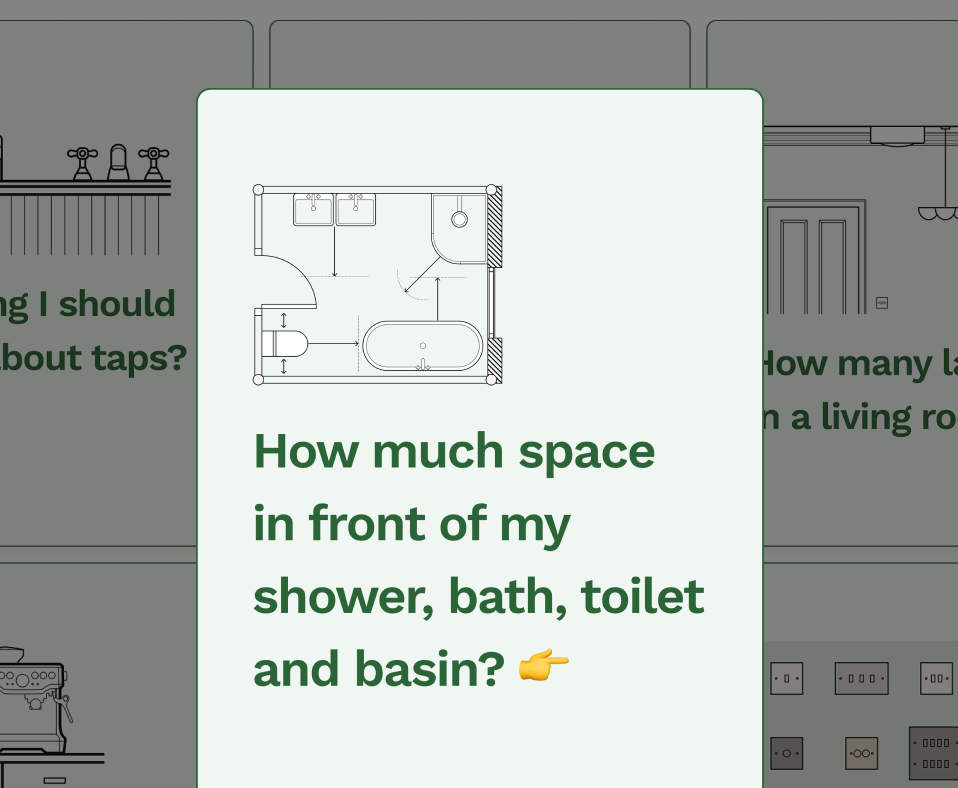
Dimensions and understanding the space needed around your bathroom items
You'll want at least 700mm of clear floor space in front of your basin, toilet, shower, or bath - basically enough room to use them comfortably.
All rooms
Save money, save energy and save water from your renovation.
You've got the vision for your dream room - colours, tiles, that perfect finish. But have you thought about how it's going to perform?
Bathroom
Why moving a toilet is a big decision
It will add to the overall time required to complete the project, which, in turn, increases the cost.
Bathroom
Can you add an ensuite to a small bedroom?
This requires careful planning and design to make the most of the available space. Here are some key considerations...
Free tools to get started

Join our mailing list and get 10% off
Who are you? *
By signing up, you are agreeing to our Terms and Privacy Policy including receiving emails from us at Reno (you can unsubscribe at any time). Opted out but want back in? Re-subscribe to the mailing list .
Start your renovation with Reno