Help & advice
Why is the bathroom light switch outside the bathroom?
Last updated: March 27, 2026
So, why all the fuss about switches and sockets in bathrooms? It's simple: water increases the risk of electric shock. That's why you'll rarely see a traditional light switch inside a bathroom – just pull cords - and why switches outside the door are the norm.
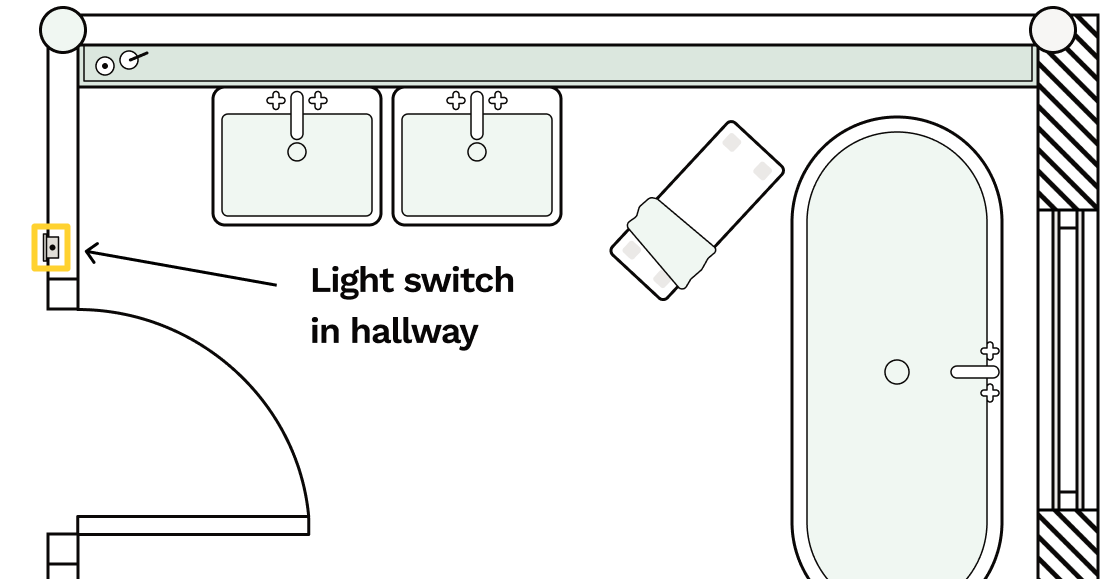
Always get a qualified electrician to do any work - but if you're wondering why your electrician keeps talking about “zones,” here's the lowdown.
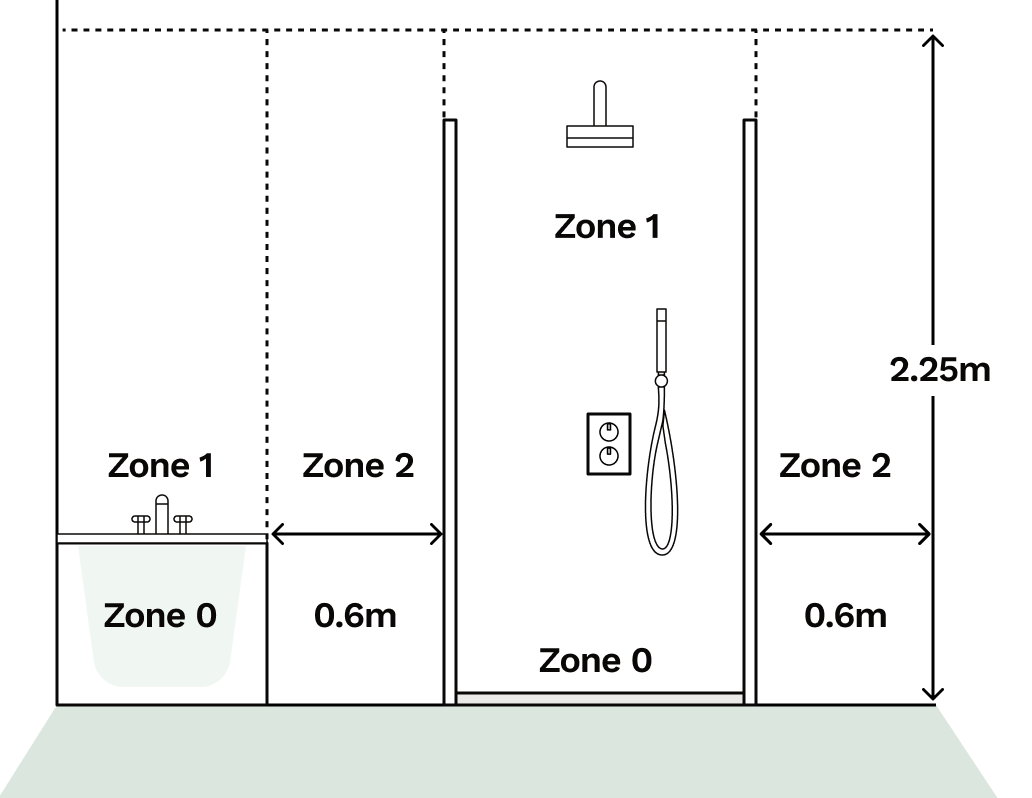
In the UK, bathroom electrics are governed by regulations from the IET (Institution of Engineering and Technology) and British Standards (BS 7671 if you fancy some bedtime reading). These rules outline three bathroom zones to help you understand what can safely go where.
- Zone 0 in the bathroom refers to the interior of the bath or shower where only low-voltage electrical devices specifically designed for wet conditions are permitted
- Zone 1 encompasses the area directly above Zone 0, extending up to 2.25 metres above the water source, where only IPX4-rated electrical devices, such as splash-proof lighting fixtures, are allowed
- Zone 2 extends horizontally from the edge of Zone 1 to a distance of 0.6 metres beyond it, also requiring IPX4-rated electrical equipment to protect against those splashes
You also have to ensure all electrical items are designed for use where they are being installed.
So If you have a big bathroom that extends beyond zones 0, 1, and 2, you still need to install anything electrical with moisture/water protection - because it's a bathroom. So there you are, this is why we have light switches outside of the bathroom, and not inside, and why you'll only really see pull cords inside.
Frustrated by friends and family / children switching off the light while you are in there? Get a mirror with lights built in, or even a motion sensor!

Frequently asked questions
Why is the bathroom light switch outside the bathroom?
It's all about safety. Water increases the risk of electric shock, so traditional switches aren't allowed inside bathrooms. That's why you'll see pull cords or switches outside the door – it keeps everything safe and compliant with UK regulations.
What are bathroom zones, and why do they matter?
Bathroom zones are areas defined by how close they are to water, helping electricians decide what can safely go where. Zone 0 is inside the bath or shower, basin – only super low-voltage devices designed for wet conditions can go here. Zone 1 is above the bath or shower, up to 2.25m – you'll need splash-proof (IPX4-rated) fittings here. Zone 2 extends 0.6m out from the bath, shower, or sink – again, IPX4-rated items only. Even beyond these zones, any electricals in a bathroom or ensuite still need to be moisture-protected.
What's the deal with IP ratings?
IP ratings (Ingress Protection) tell you how well an electrical item is sealed against water and dust. For bathrooms, look for IPX4 or higher – it means the item is splash-proof and safe to use near water. Always check the rating to make sure it's up to the job.
Can I install a regular light or plug socket in my bathroom?
Short answer: no. Anything electrical in your bathroom needs to be designed specifically for that space. Your electrician will ensure it meets all safety standards – and that includes not installing standard sockets near sinks or showers.
How can I stop people switching the bathroom light off while I'm in there?
This one's annoying but fixable! Consider a mirror with built-in lighting or even a motion sensor light. That way, you're in control.
Renovating? Read more...
Bathroom
Dimensions and understanding the space needed around your bathroom items
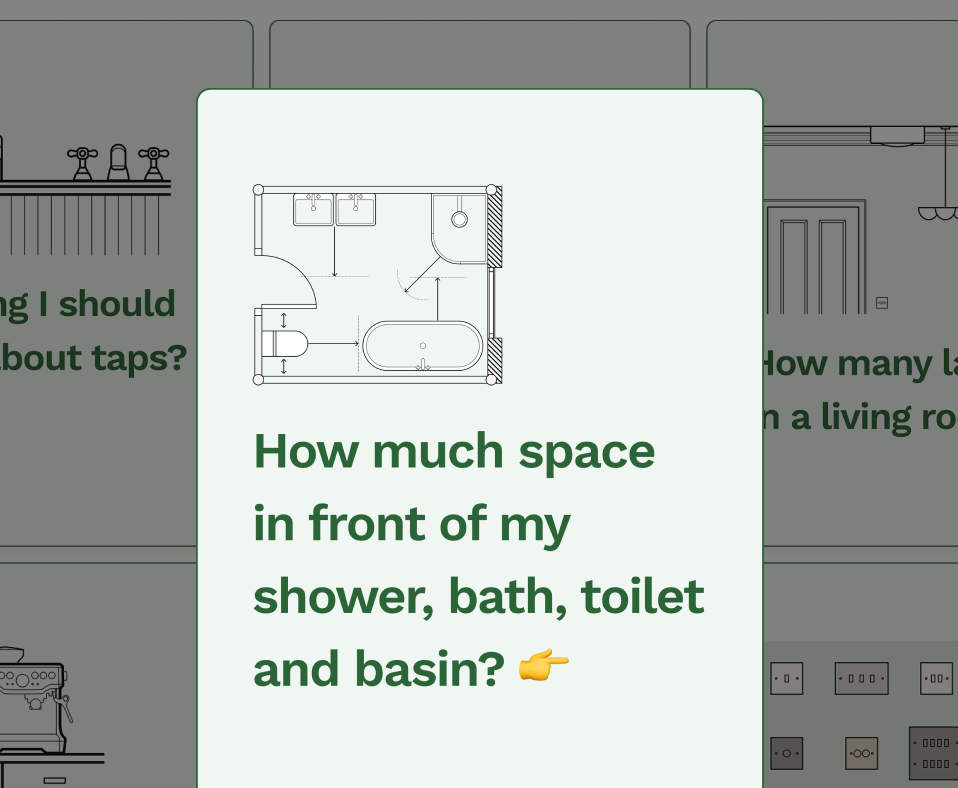
You'll want at least 700mm of clear floor space in front of your basin, toilet, shower, or bath - basically enough room to use them comfortably.
All rooms
Save money, save energy and save water from your renovation.
You've got the vision for your dream room - colours, tiles, that perfect finish. But have you thought about how it's going to perform?
Bathroom
Why moving a toilet is a big decision
It will add to the overall time required to complete the project, which, in turn, increases the cost.
Bathroom
Choosing bathroom tiles? All the things to think about
Planning to do up your bathroom and finger hovering over the order button after spending nights on Pinterest?
All rooms
Where do you want the light switches?
Understanding the reasons behind where the light switch goes for bathrooms and ensuites in the UK.
Bathroom
What all the things mean when choosing a shower
Thermostatic valves, pressure, flow rates, concealed vs exposed, twin outlets, rainfall heads… and it's not obvious what any of it really means or what matters.
Bathroom
Where should towel rails, hooks and toilet roll holders go?
These small bathroom accessories affect how the room works every day, and they are much easier to position properly if they are planned before the end.
Free tools to get started


Join our mailing list and get 10% off
Who are you? *
By signing up, you are agreeing to our Terms and Privacy Policy including receiving emails from us at Reno (you can unsubscribe at any time). Opted out but want back in? Re-subscribe to the mailing list .
Start your renovation with Reno