Help & advice
Where do I start planning a new bathroom? What is the to do list?
Last updated: March 10, 2026
It's a small room, but probably the most complicated to get right.
Once you start thinking about plumbing, layout, storage, lighting, extractor fans, the number of decisions adds up quickly. Most problems people run into later usually come from rushing the planning up front - so if you’re going to take one thing away from reading this, is that you need to plan, thoroughly!
It is going to take at least a few weeks of decision making before getting trades involved. You need to plan enough up front to have the information you need to get comparable quotes, and understand whether the trades you are dealing with are covering your plan, or some generic idea of what you might be looking for. Saves a lot of frustration and cash once the work starts!
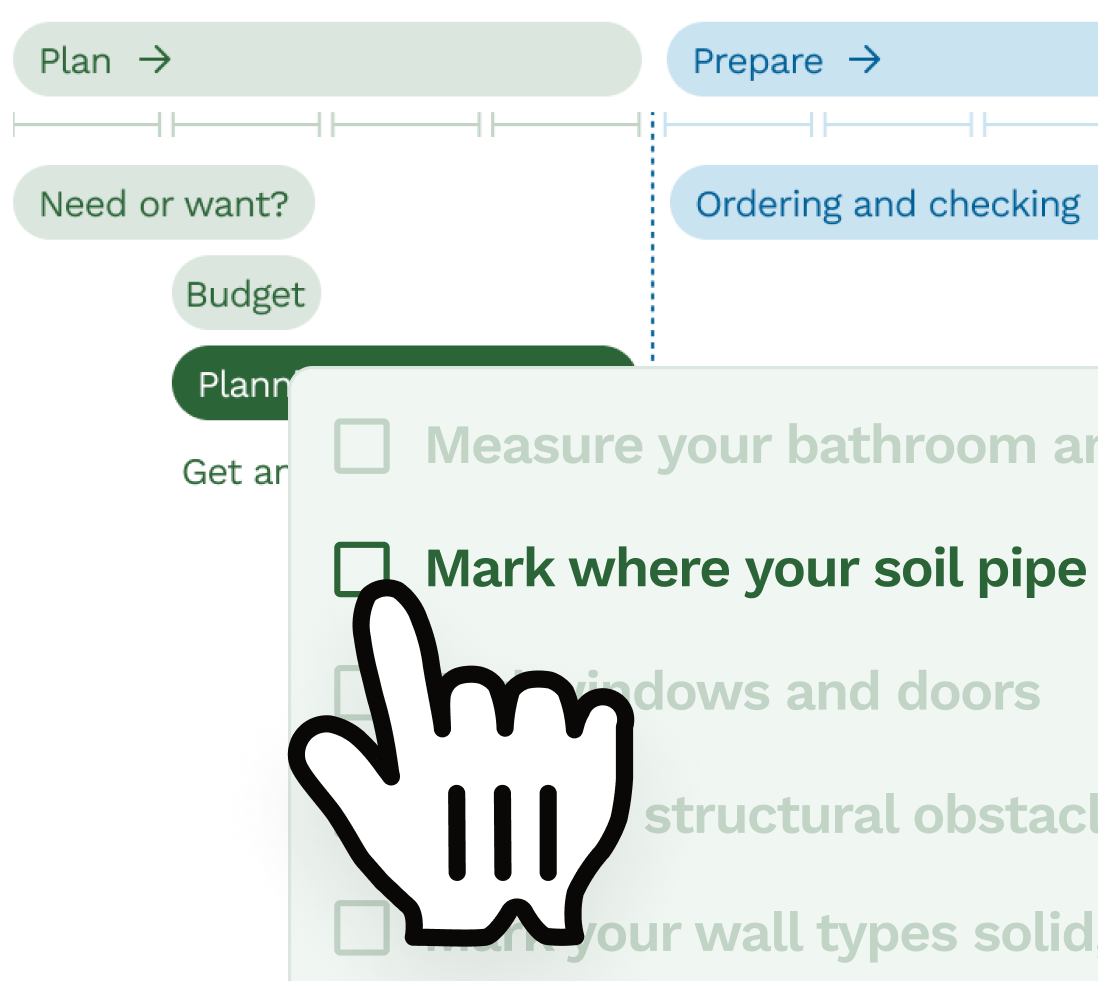
Keeping track of all of this feeling like too much effort? We have even made an interactive, free Bathroom Renovation Planner Checklist for you to tick-off as you go too.
Start with what you need, not what you want
Before looking at tiles or taps, think about what the room actually needs to do.
Ask yourself:
- Who will be using the bathroom?
- Is it a main family bathroom or a guest space?
- Is this a long-term home or are you renovating to sell?
The best way to start is with two lists.
Wants
Things you'd love to have e.g. a large walk-in shower, a freestanding bath, beautiful marble tiles.
Needs
The practical things the room has to deliver e.g. enough storage, space for children to get ready, good lighting, easy cleaning.
Once you have both lists, prioritise them into a single 'this is what the bathroom must do' list. That (and your budget) become the basis for every other decision.
Set a realistic budget early
The earlier you set one, the easier it's going to be to decide between different layout options, fittings and materials without constantly second-guessing.
The biggest cost isn't the taps or tiles, it's the labour and plumbing work.
Include a healthy contingency (at least 10%) into your budget for the unexpected rotten joists / wall / old pipe replacements.
As a general rule:
- Replacing items in the same position is cheapest
- Moving plumbing, especially the toilet, is the most expensive
Understanding that trade-off early will help you avoid expensive changes later and shock surprises in your quotes.

Plan the layout
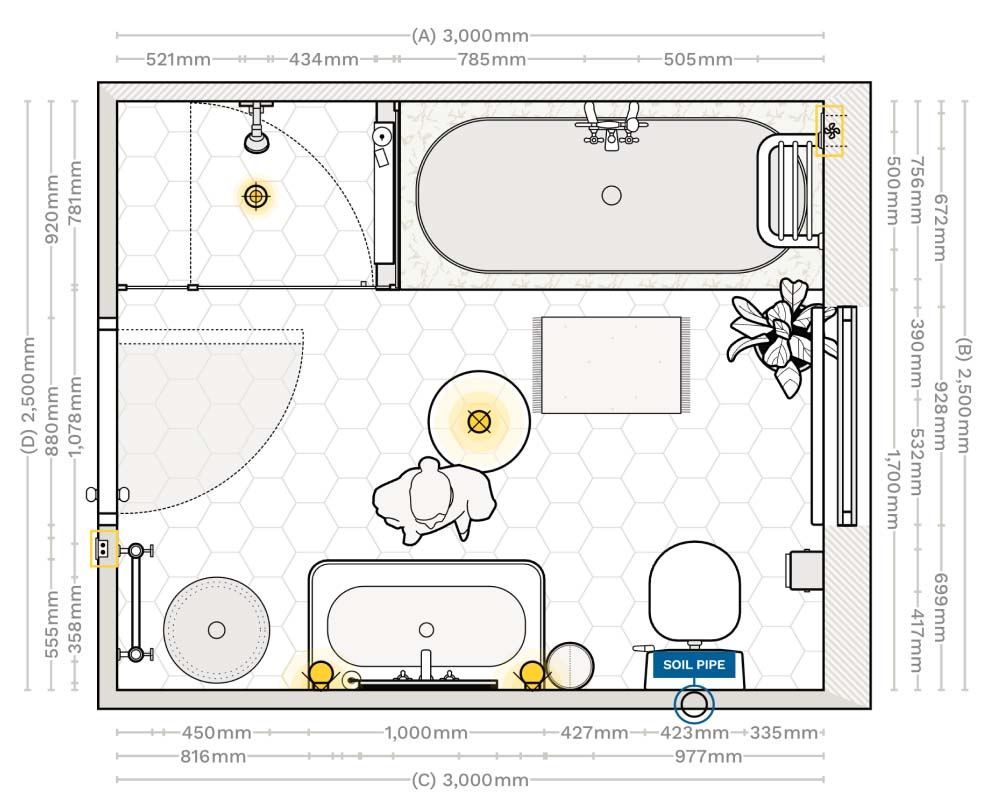
Check out this example bathroom plan made on Reno, from the floor plan to the elevations, plumbing points and measurements.
It's tempting to choose fixtures first, but most bathroom products affect the layout more than you'd expect.
For example:
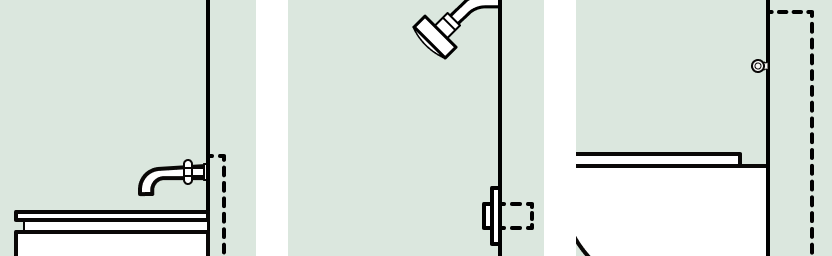
- Wall mounted taps need pipework inside the wall
- Concealed showers need space for valves
- Back to wall toilets need space for the cistern, wall hung toilets a frame too
Any extra structure to cover those choices can easily take up more room, changing how everything fits.
This is why creating a to-scale plan of your bathroom is one of the most useful things you can do early on.
Start by marking:
- The soil pipe location (where it exits the room)
- Windows and doors
- Structural elements like pipe columns or attic hatches
- Wall types (solid or stud)
- Floor construction (concrete or suspended timber)
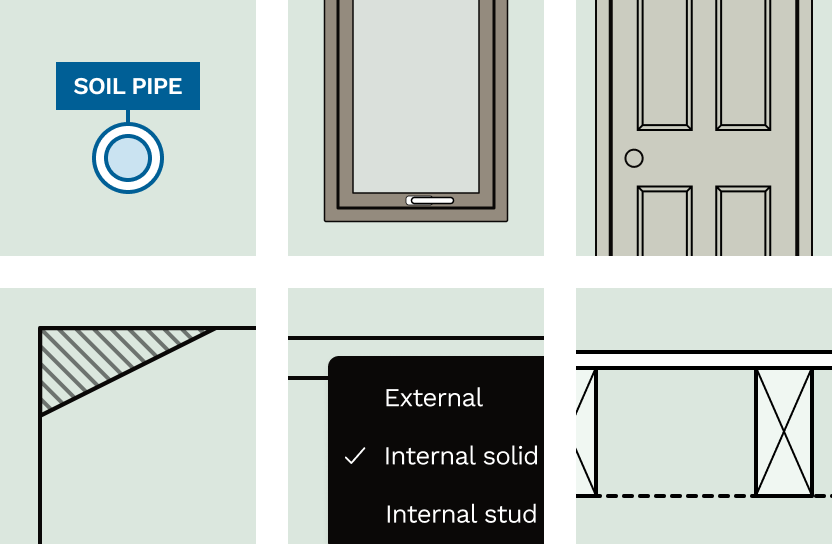
These details determine what can realistically move and what is best left where it is.
If you want to organise all of this properly, it helps to plan this to scale! Have a play with a demo room to see how you'd go about creating your own.
Then think about how the room will actually work. You should be able to:
- Move comfortably around the fixtures
- Open shower doors or cupboards easily
- Reach gaps for cleaning
- Use the mirror (lighting properly)
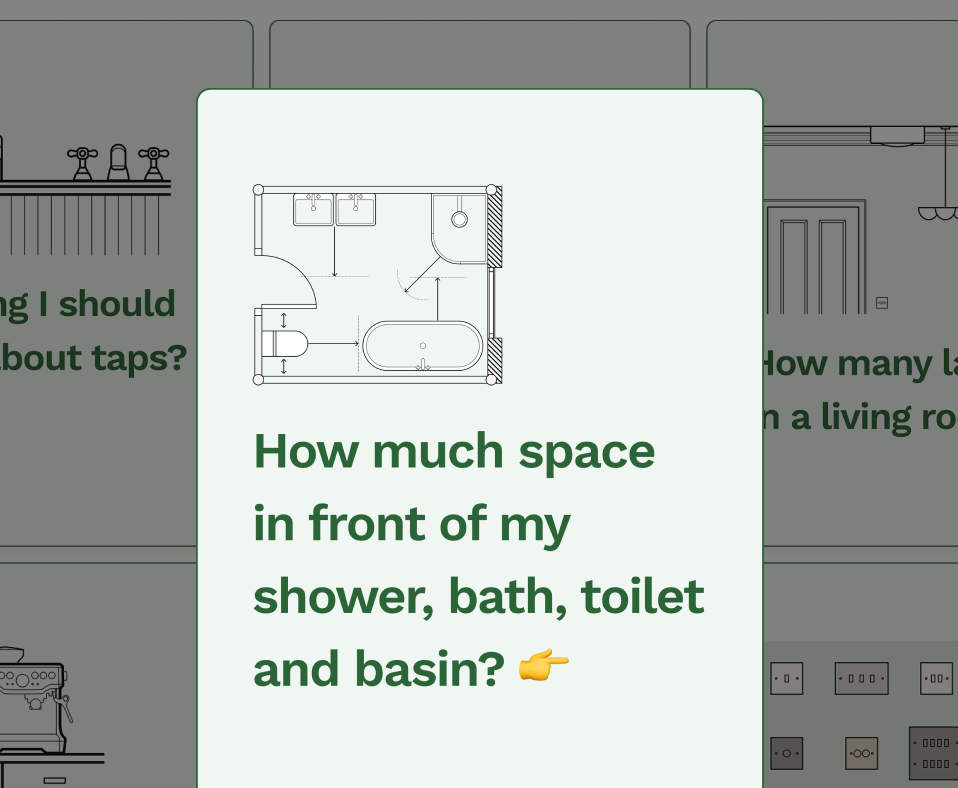
Wondering how much space to leave around, between and to the sides of toilets basins baths and showers? We've got you covered - read our guide on the critical bathroom dimensions.

Choose fittings once the layout is confirmed
There may be a bit of back and forth here, but once the layout works, you can start the bit that you probably started way earlier before realising you had so much planning to do! Choosing:
- Sanitaryware - bath, toilet, basin, shower
- Taps and shower valves
- Tiles and flooring including finishing edges and door thresholds
- Lighting and electrics
Check:
- Product dimensions
- Installation requirements
- Delivery lead times
Ensure everything fits your plan and check delivery lead times-tiles, for example, can take *months* to arrive.
Materials that require low energy to produce, or natural materials delivered without intensive mining, have the least impact on the planet. Look for certification and information on sourcing and manufacturing processes when you are making a decision.

Find the right trades
The people you hire can make or break your renovation.
Recommendations from friends, neighbours or local community groups are usually the most reliable way to find someone.
Once you have a shortlist:
- Do your research - check reviews, past projects, and even financial health (yes, it's worth a Companies House search)
- Get three quotes - ensure you receive detailed breakdowns of costs for materials and labour. Clarify if quotes are fixed or estimates
- Ask for a breakdown of labour and materials
- Immediate availability might be a red flag - quality trades are often in high demand
It's also worth clarifying whether a quote is an estimate or a fixed cost, and agreeing a written contract before work begins.
Order materials early
One of the most common delays in bathroom renovations is waiting for materials to arrive.
Even though some fittings aren't installed until later, plumbers will often need taps and valves during the first fix plumbing stage to understand fitting needs, so they must be available early.
Aim to have everything delivered at least two weeks before work starts so you can check for damage, missing parts or incorrect items.
Prepare your home before work starts
- Order materials - allow extra time for deliveries, and check for damages or missing items early. Pay attention to returns options and timing
- Empty cabinets and work out a temporary bathroom solution if you need one
- Plan where to store them - bathroom furniture takes up a lot of space, as do stacks of boxes of tiles!
- Protect your home - cover floors and seal off rooms to minimise dust
You'll also need to clarify details with your tradespeople, such as schedules, access to your home, and how you'll communicate during the project.
What happens during the renovation
The actual renovation work of a typical bathroom takes around 3 - 4 weeks. The process usually follows this order:
- Demolition - removing tiles, flooring, and old fixtures
- Building work - replacing windows, re-enforcing floor joists etc
- First fix - laying pipes and installing cables
- Plastering and tiling - including floor preparation and sealing / waterproofing
- Second fix - installing the sanitaryware, the light fixtures
- Decoration - painting, decorating, and snagging
- Snagging and final checks
During the process, keep an eye on progress and tackle any issues immediately. Better to address a misaligned tile now than regret it later!
Snagging and final checks
Once the work is done, test everything before your trades leave. Run the shower, flush the toilet, and make sure taps work smoothly. It's also wise to ask where access points (like cisterns) are for future maintenance.
Want the fullest to do list ever?
This is just the beginning. Our bathroom planning to do list takes you step-by-step through everything you need to think about, from choosing your dream fixtures to comparing quotes. It's free and will save you countless headaches down the line!
Frequently asked questions
What should you do first when planning a bathroom renovation?
The first step when planning a bathroom renovation is deciding what you need versus what you want from the space. Think about who will use the bathroom, how it needs to function day to day, and what improvements matter most before choosing fixtures or finishes.
How long should you spend planning a bathroom renovation?
It's sensible to allow at least four weeks for planning and decision-making before booking trades. This gives you time to finalise your layout, choose fixtures and fittings, check dimensions, confirm lead times and compare quotes properly.
Why is the toilet position important in a bathroom layout?
The toilet position is usually determined by the soil pipe location, which carries waste out of the home. Moving a toilet often requires significant plumbing work, so it is usually easier and cheaper to plan the layout around the existing soil pipe where possible.
How much space should you allow around bathroom fixtures?
You'll want at least 700mm of clear floor space in front of your basin, toilet, shower, or bath - basically enough room to use them comfortably. This space keeps you from feeling squished and ensures you can move around easily. For toilets, make sure you've got at least 200mm on each side. Trust us, your elbows will thank you!
Why should you create a to-scale bathroom plan?
Creating a to-scale bathroom plan helps ensure that all fixtures and fittings actually fit in the space. It also allows you to identify obstacles such as windows, doors, soil pipes and wall types before committing to products or layout changes.
When should you order bathroom fixtures and materials?
Bathroom fixtures and materials should usually be ordered at least two weeks before work begins, but check your lead times as early as possible. This gives you time to check deliveries for damage, confirm all parts are present and organise returns if anything is incorrect before installation starts.
How long does a typical bathroom renovation take?
A typical bathroom renovation takes around three to four weeks, depending on the level of building work involved. The process usually includes demolition, plumbing and electrical first fix, plastering, tiling, installing the bathroom suite, second fix electrics and finishing work.
What is the typical order of work in a bathroom renovation?
Bathroom renovations usually follow this sequence:
- Demolition - removing tiles, flooring, and old fixtures
- Building work - replacing windows, re-enforcing floor joists etc
- First fix - laying pipes and installing cables
- Plastering and tiling - including floor preparation and sealing / waterproofing
- Second fix - installing the sanitaryware, the light fixtures
- Decoration - painting, decorating, and snagging
- Snagging and final checks
Do I need planning permission to renovate a bathroom?
Most bathroom renovations inside an existing home do not require planning permission. However, permission may be needed if the renovation is part of a larger extension, structural alteration, or change to the external appearance of the property.
What is first fix plumbing in a bathroom renovation?
First fix plumbing is the stage where new pipes and pipe routes are installed before walls and floors are closed up. This includes water supply lines and waste pipes for the bath, shower, basin and toilet.
What is second fix plumbing in a bathroom renovation?
Second fix plumbing happens near the end of the renovation when the visible fixtures are installed and connected. This includes fitting the toilet, basin, shower, bath taps and testing the plumbing system.
How many quotes should you get for a bathroom renovation?
It's recommended to obtain at least three quotes from different trades or contractors. Comparing multiple quotes helps you understand the realistic cost of the project and gives you a better sense of each contractor's approach and experience. By having a plan to work from in the first place, you're making sure the quotes are for the same work so easier to compare.
Renovating? Read more...
Bathroom
Dimensions and understanding the space needed around your bathroom items
You'll want at least 700mm of clear floor space in front of your basin, toilet, shower, or bath-basically enough room to use them comfortably.
Bathroom
Bathroom layout rules you didn't know you were breaking
Most bathroom layout problems are not about taste. They come from not knowing about (or ignoring!) a handful of rules around space planning, plumbing, electrics and day to day use.
Bathroom
How do I find the best bathroom layout for my space?
Here's a pro tip: start with the toilet. Why? Because it's the one fixture that's hardest to move.
Bathroom
I only have a small bathroom, what can I do to make the most of the space?
There are lots of smart ways to design a bathroom to make the most of the space that also make it feel larger.
Bathroom
Why moving a toilet is a big decision
It will add to the overall time required to complete the project, which, in turn, increases the cost.
Bathroom
Which bathroom extractor fan to choose?
Ready for the day you have to make that unknown decision (or now that you know, earlier) we've summarised the trade offs you'll need to make when it comes to deciding on an extractor fan for your bathroom.
Bathroom
Can you add an ensuite to a small bedroom?
This requires careful planning and design to make the most of the available space. Here are some key considerations...
Bathroom
Choosing bathroom tiles? All the things to think about
Planning to do up your bathroom and finger hovering over the order button after spending nights on Pinterest?
Bathroom
What needs to be waterproofed in a bathroom?
Tiling a bathroom does not make it waterproof. The waterproofing sits behind the visible finish and protects the structure of your home.
Free tools to get started
Join our mailing list and get 10% off
Who are you? *
By signing up, you are agreeing to our Terms and Privacy Policy including receiving emails from us at Reno (you can unsubscribe at any time). Opted out but want back in? Re-subscribe to the mailing list .
Start your renovation with Reno