Help & advice
Where should appliances go in a kitchen?
Last updated: April 02, 2026
A fridge in the wrong place, a dishwasher too far from the sink, or an oven door blocking a walkway will make a kitchen pretty frustrating to use.
Start with how you actually use the kitchen
You'll have heard about the "kitchen triangle" (sink, hob, fridge), and it's a useful starting point.
But most kitchens now need to do more than just cooking, so it helps to think in terms of zones instead:
- Food storage (fridge, freezer, pantry)
- Prep (worktops, sink, bins)
- Cooking (hob, oven, small appliances)
- Cleaning (sink, dishwasher, bin)
- Morning Coffee (sink, grinder, coffee machine)
- Even laundry if that happens here too!
The aim is to keep related things close together so you are not constantly crossing the room.
General rules that work in most kitchens
- Place the fridge somewhere easy to access without walking through the whole kitchen
- Keep the sink, dishwasher and bin close together
- Allow clear prep space between the fridge and the hob
- Avoid placing appliances where doors will clash or block walkways
- Aim for a bare minimum of 900mm clearance between runs of units, around 1000-1200mm is ideal
Where each appliance should go
Fridge / freezer
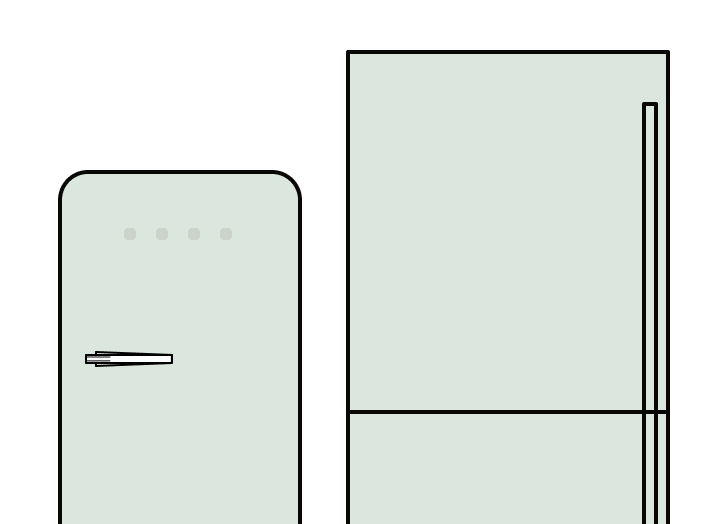
Ideally near the entrance to the kitchen so it can be accessed easily without disrupting someone cooking.
Make sure the doors can open fully without hitting anything, and still have space to move past when open.
Dishwasher
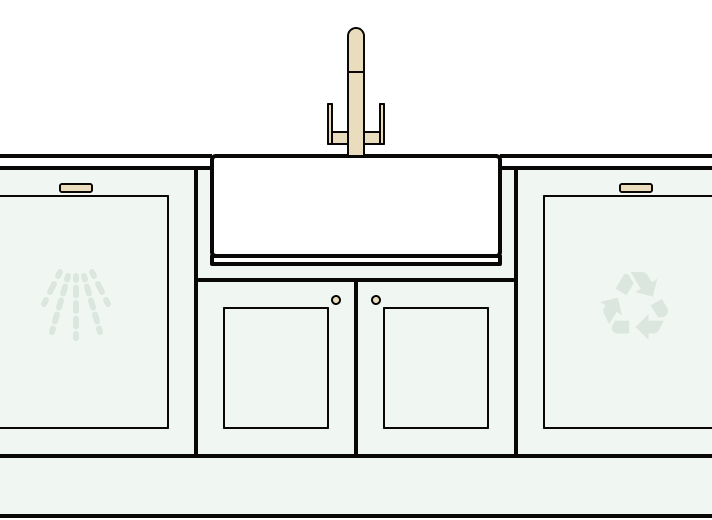
Next to the sink and near the bin both for plumbing and practical clean up moving from one to the other.
You'll also want the dishwasher to be near where the clean plates and cutlery are stored so that emptying the dishwasher is quick and easy.
Make sure you can stand comfortably in front of the dishwasher while it is open without blocking the main walkway.
Oven or Cooker
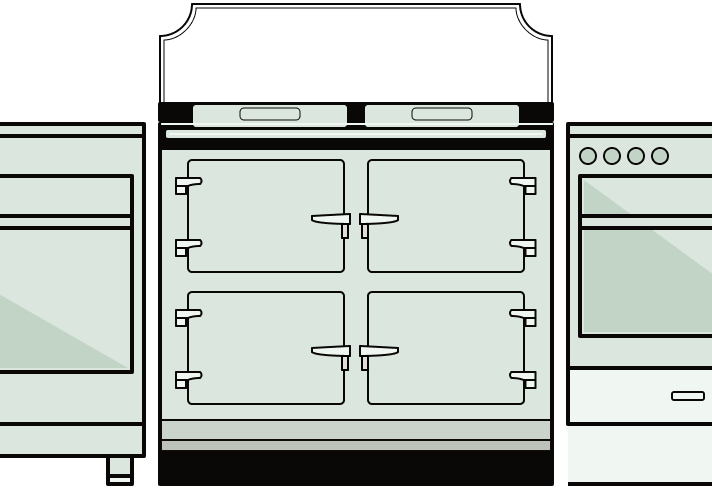
If it's built-in, take the opportunity to position the oven at a comfortable height.
Avoid placing ovens directly next to a fridge, as heat and cooling systems don't mix well.
Think about where hot trays will go when they come out of the oven.
Hob
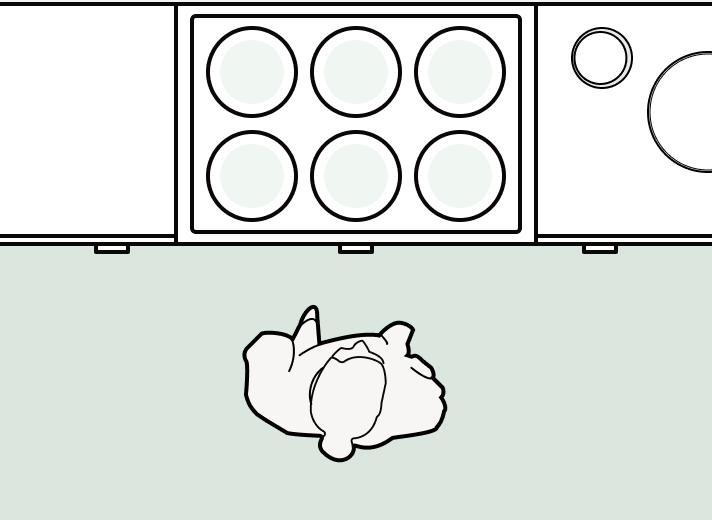
Allow space either side of your hob so you have somewhere to put hot pans down.
Avoid placing it directly against a wall where possible, as pot handles can make things crowded in less space.
Think about the distance to walk from the hob to the sink with a boiling pot of pasta!

What about small appliances?
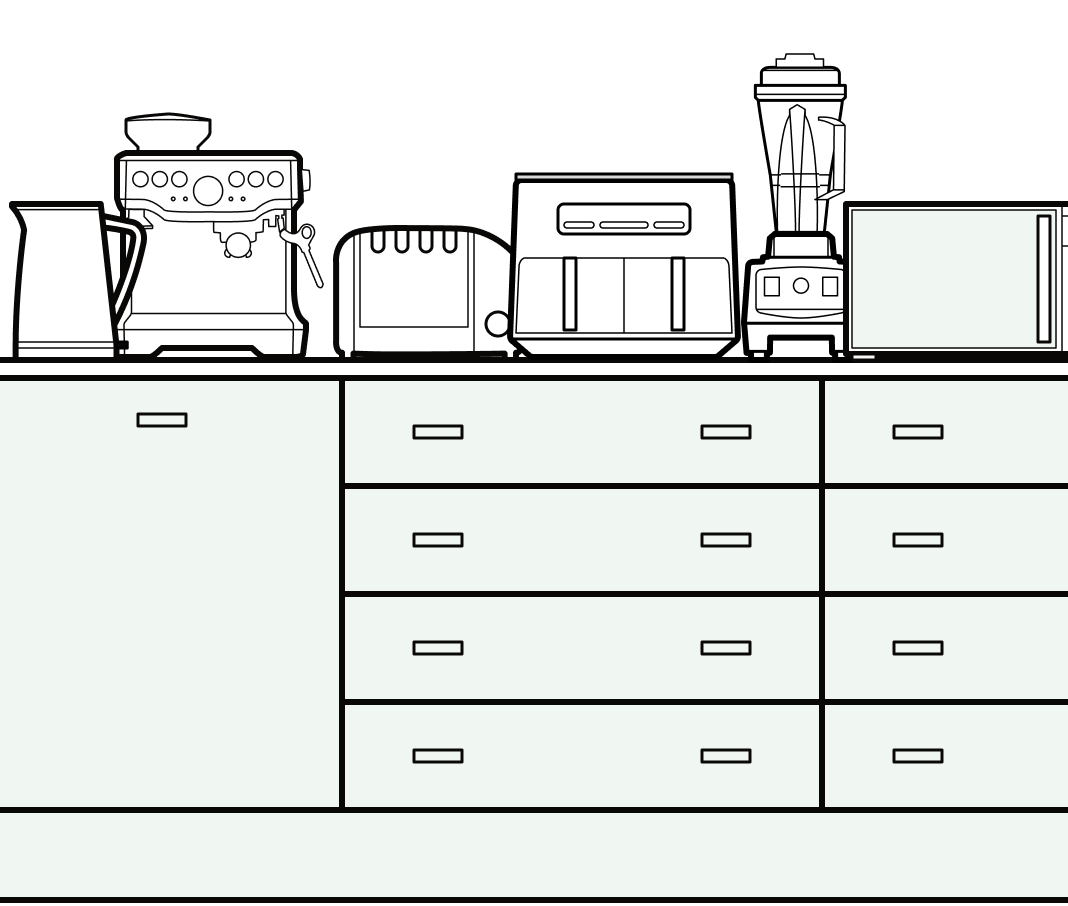
It's easy to focus on the big appliances, but small appliances often have a bigger impact on how your kitchen actually feels to use.
Think about:
- Kettles
- Toasters
- Coffee machines
- Microwaves
- Air fryers
- Blender / food processors
- Food mixers
- Rice cookers
- Slow cookers
- Toastie-makers
The key question is do they live out permanently, or get stored away? How often do they get used?
If they live out
You need to plan for:
- Enough worktop space
- Sockets in the right place
- Not clustering everything in one corner
A common issue is ending up with all small appliances competing for one section of worktop near a single socket...
If they are stored away
You need to plan for:
- Easy-to-access storage (not too high, not too deep)
- Enough space to actually fit them
- Somewhere practical to use them when needed
If you have to lift something heavy out every time you use it, you probably won't.
A useful middle ground
- Appliance garages!
- Dedicated breakfast cupboards
- Pull-out shelves
These allow you to:
- Keep appliances out of sight...
- ...but still plugged in and ready to use
Plan where your small appliances go alongside your plan for your sockets.
Things people don't think about
- Appliance doors opening into walkways
- Door clash
- Where hot trays go when they come out of the oven
- Where you stand when unloading the dishwasher
- How two people will use the kitchen at the same time
And even if you keep your appliances in roughly the same place, changes in...
- Appliance size
- Door opening direction
- Surrounding cabinetry
...can affect how usable the space is.
A layout that "worked before" doesn't always work with new appliances!
Frequently asked questions
Where should appliances be placed in a kitchen?
Appliances should be placed based on how the kitchen is used, grouping them into zones such as storage, prep, cooking and cleaning. Keeping related appliances close together reduces unnecessary movement and improves workflow.
Where should a fridge go in a kitchen layout?
A fridge is best placed near the entrance to the kitchen, so it can be accessed easily without disrupting cooking. It should also have enough space for the door to open fully without blocking walkways.
Should a dishwasher be next to the sink?
Yes, a dishwasher should be placed directly next to the sink for both plumbing efficiency and practicality. This makes it easier to rinse and load items without moving across the kitchen.
Where should an oven be positioned in a kitchen?
An oven should be positioned at a comfortable height for access, ideally with nearby worktop space for placing hot trays. Avoid placing it directly next to a fridge where possible.
How much space should you leave between kitchen units?
You should allow a bare minimum 900mm clearance between kitchen units, with more space in main walkways or where multiple people are using the kitchen at the same time.
Where should small appliances go in a kitchen?
Small appliances should be planned based on whether they are used daily or occasionally. Frequently used items like kettles and coffee machines should have dedicated worktop space and nearby sockets, while others can be stored in accessible cupboards.
How do you plan sockets for kitchen appliances?
Sockets should be planned based on where appliances will be used, not added afterwards. This helps avoid overcrowding one area and reduces the need for extension leads across the worktop.
Can appliance doors block kitchen walkways?
Yes, poorly placed appliances can block walkways when opened. It is important to check that fridge, oven and dishwasher doors can open fully without restricting movement through the kitchen.
What is the best kitchen layout for appliances?
The best kitchen layout keeps appliances within easy reach of each other, often using zones or the traditional kitchen triangle. The right layout depends on room size, shape and how the space is used day to day.
Do I need to plan appliance placement before installation?
Yes, appliance placement should be planned before installation because it affects plumbing, electrics and cabinetry. Making changes later can be disruptive and expensive once services are in place.
Renovating? Read more...
Kitchen
Why we still love blue kitchen cabinets
How to choose the right blue, soften it with off-whites and finish the look with chrome.
Kitchen
Where should bins go in a kitchen?
Bins are one of the most used parts of a kitchen. Get it wrong and you will notice it every day.
Kitchen
Where to put sockets in a kitchen
Planning your kitchen sockets might not be the most exciting part of a renovation, but getting it right makes a huge difference to how easy your kitchen is to use.
Kitchen
Planning the best layout for your kitchen
One of the first steps in kitchen planning is understanding the room's physical features.
All rooms
What needs to be decided before first fix?
Pipes and cables are installed inside walls and floors, so changes become expensive and disruptive.
Utility
Where can I fit a washing machine and dryer?
A practical guide to planning washing machines, dryers, airers, sinks and dog showers in UK utility rooms, cupboards and laundry spaces.
Free tools to get started


Join our mailing list and get 10% off
Who are you? *
By signing up, you are agreeing to our Terms and Privacy Policy including receiving emails from us at Reno (you can unsubscribe at any time). Opted out but want back in? Re-subscribe to the mailing list .
Start your renovation with Reno