Help & advice
Dimensions and understanding the space needed in your kitchen
Last updated: May 21, 2026
Everything might technically fit on a plan, but that does not mean it will feel comfortable to use once the doors, drawers, appliances and people are involved. The key thing is to think beyond the cabinet sizes.
You need to allow space for moving around, opening doors, standing at appliances, pulling things out and using the kitchen day to day.
Clearance zones
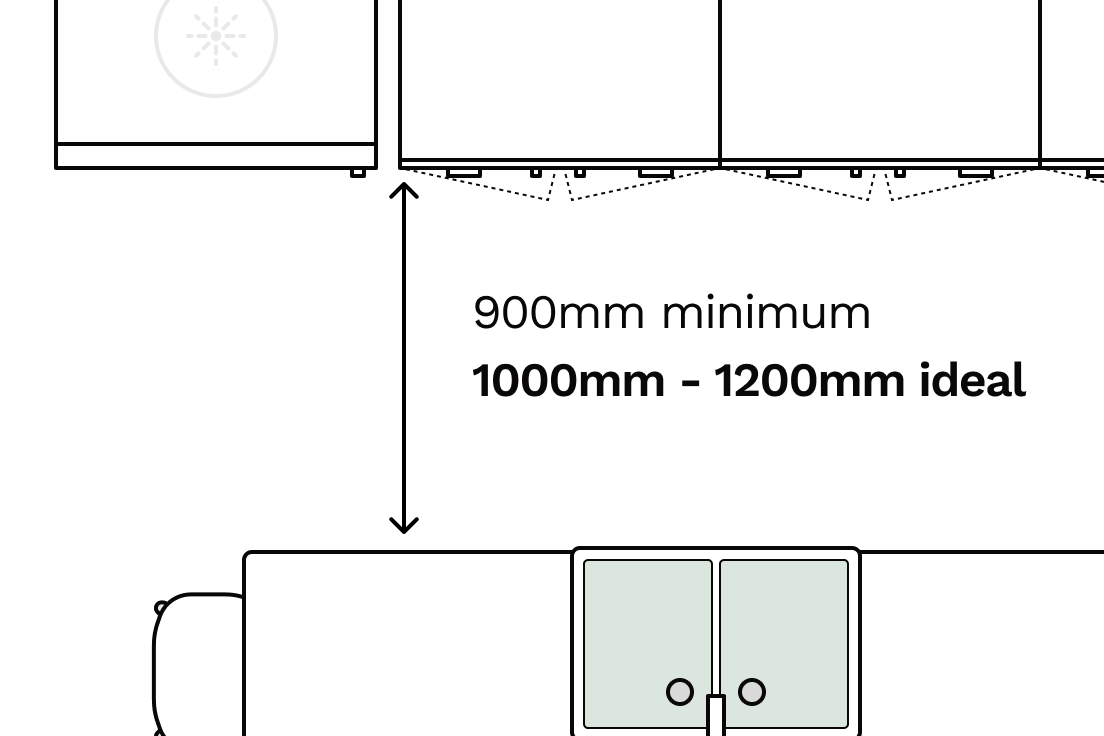
As a rule of thumb, aim for at least 900mm clearance between runs of units, or between units and an island. This gives you enough room to move around and open drawers, cupboards and appliances.
If you have the space, 1000mm to 1200mm usually feels much better, especially if more than one person will be using the kitchen at the same time.
There is such a thing as too much space though. Once you get beyond around 1500mm between key areas, the kitchen can start to feel disconnected. You do not want to feel like you are on a trek back and forth with hot pans.
Clearance in front of appliances
You need enough room for doors to open fully, and enough space to stand in front of the appliances while using them, so think carefully around the:
- Sink
- Dishwasher
- Fridge
- Freezer
- Bins
- Oven
- Pull-out storage
This matters most for dishwashers, fridges and bin units because they are used constantly and usually involve standing there for longer than a second.
Distance between worktop and wall cabinets
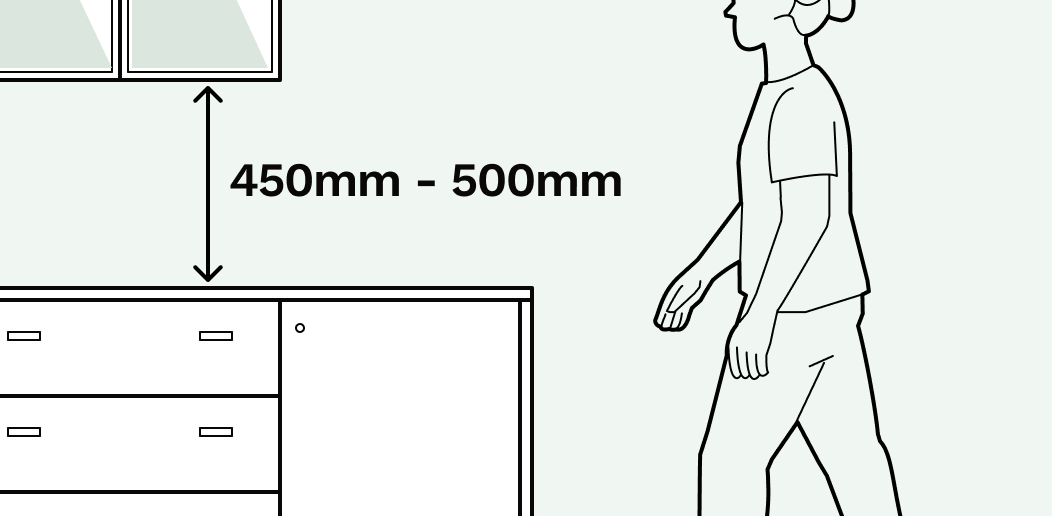
The usual recommended distance between the kitchen worktop and your wall cabinets is 450mm to 500mm (Reno automatically places wall units at 500mm above base units).
This gives you enough working space underneath without the wall cabinets feeling too high to reach.
If you are planning small appliances on the worktop, such as a coffee machine, mixer or air fryer, check the height of those too. You do not want to find out later that the coffee machine lid will not open properly under the cabinet.

Hob to extractor hood height
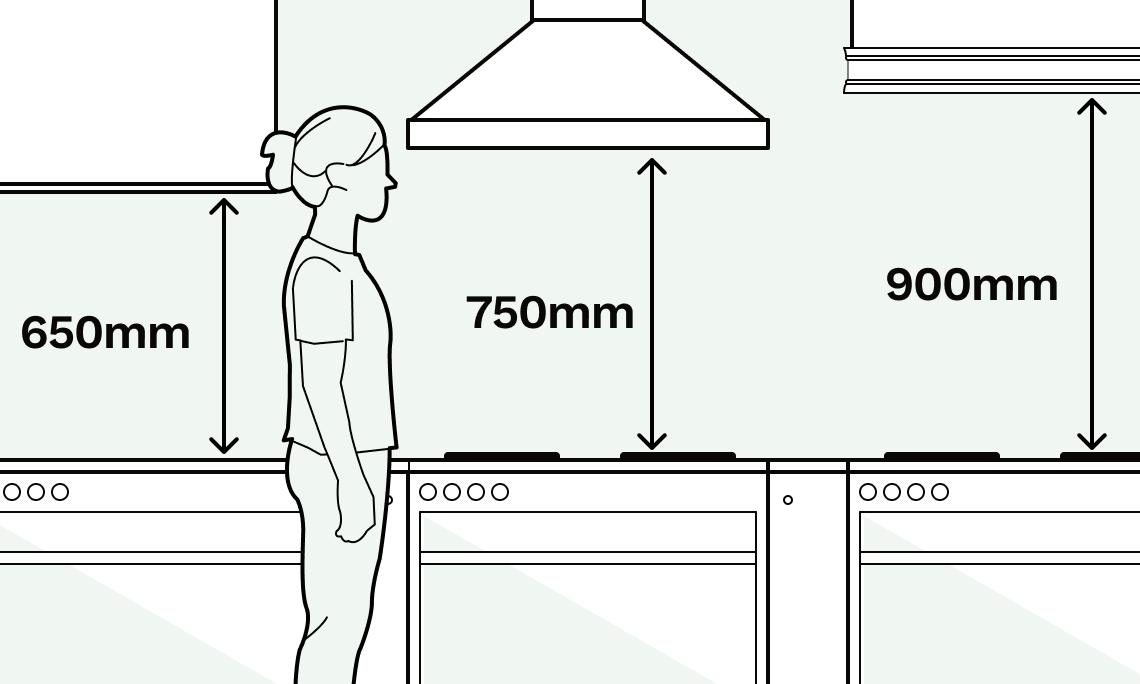
The distance between the hob and extractor hood depends on the type of hob, the style and how that works with your height(!) and the manufacturer's instructions.
- Gas hob to hood you'll find around 750mm minimum
- Electric or induction hob to hood is often around 650mm minimum
- And larger hoods e.g. plaster / chimney style will need more space to be comfortable when cooking, from 900mm
Always check the installation instructions for both the hob and the extractor hood before fixing anything in place. This is one of those measurements where the product guidance matters more than a generic rule of thumb.
Space either side of the hob
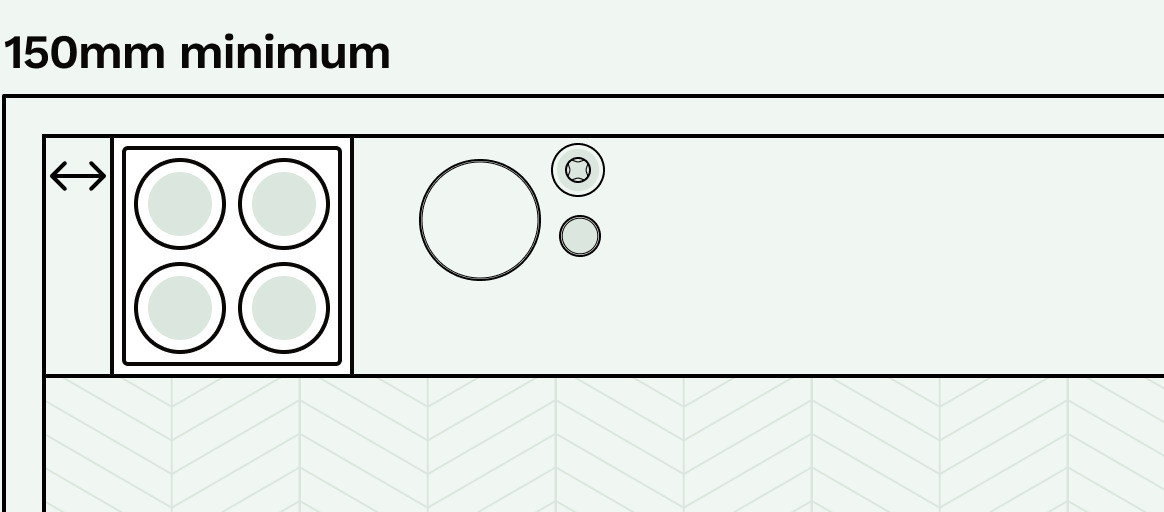
Try to allow at least 150mm between the edge of the hob and a side wall or tall unit (and check any manufacturer instructions).
You also want usable worktop space either side of the hob so you have somewhere to put pans, utensils or ingredients while cooking. Avoid squeezing the hob right into a corner if you can!
Fridge and freezer clearances
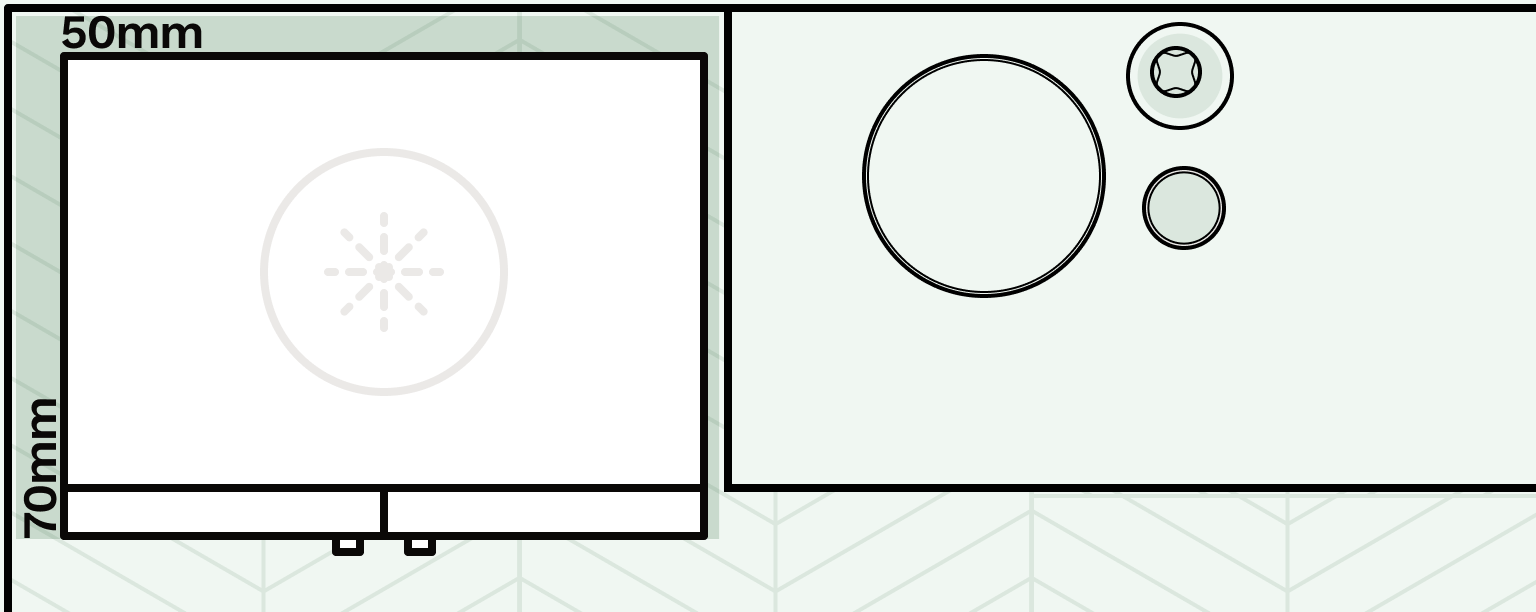
Fridges and freezers need space for two reasons:
- Doors need to open properly
- The appliance needs ventilation
As a guide, check for:
- Around 50mm at the back for air circulation
- Around 20mm to 30mm either side, depending on the appliance
- Around 70mm or more on the hinge side if the fridge is next to a wall
That hinge-side gap matters because a fridge door needs to open wider than 90 degrees to let you remove shelves, drawers or ice trays.
Always check the manufacturer's instructions before finalising cabinetry around a fridge or freezer! This can be an expensive mistake to make.
Kitchen island height and seating
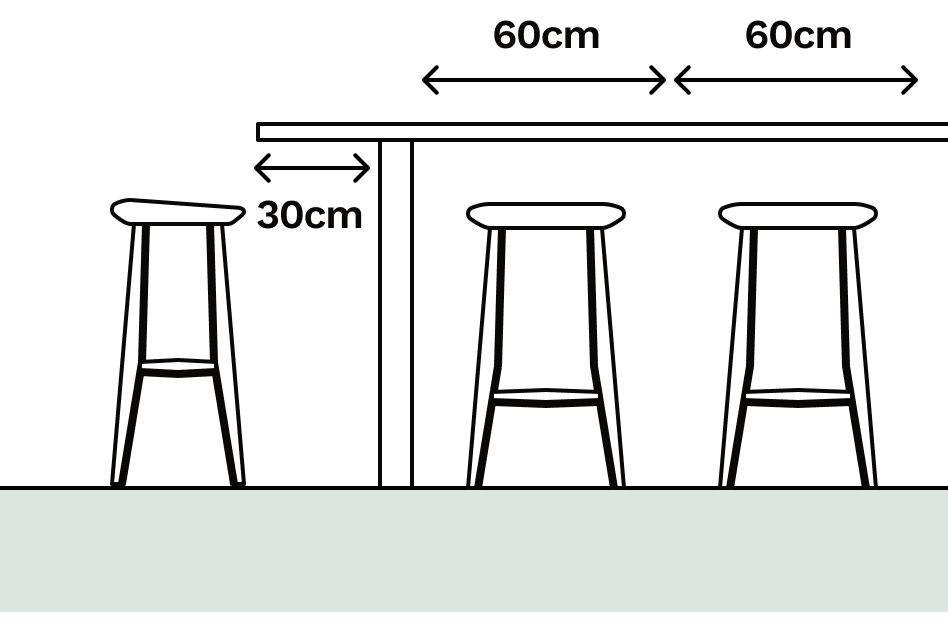
If you are adding seating, allow:
- Around 600mm width per person
- Around 300mm overhang for knee space
Without enough overhang, people end up sitting too far back from the island or awkwardly sideways.
If you want seating on more than one side, an L-shaped overhang can work well.
Read more: The essential guide to kitchen islands.
Pendant lights over a kitchen island
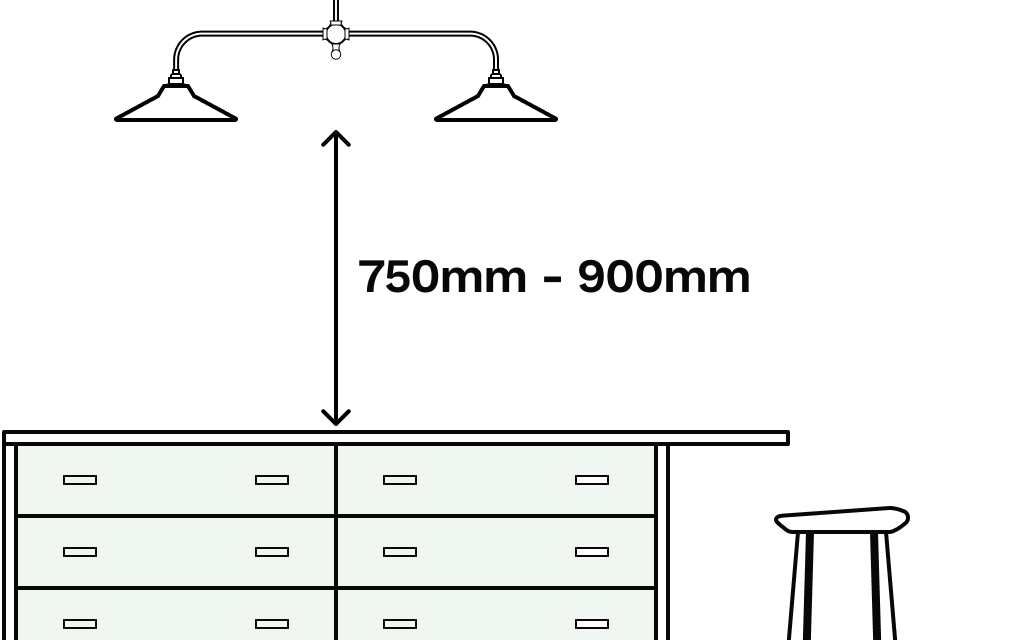
For pendant lights over an island, you are usually looking at around 750mm to 900mm clearance between the worktop and the bottom of the light (standard kitchen worktop height is around 900mm.)
The exact height depends on:
- Ceiling height
- Size of the pendant
- Whether it blocks sightlines
- Whether people will be standing or sitting at the island
You want the light low enough to feel intentional, but not so low that it gets in the way.
Socket spacing and position
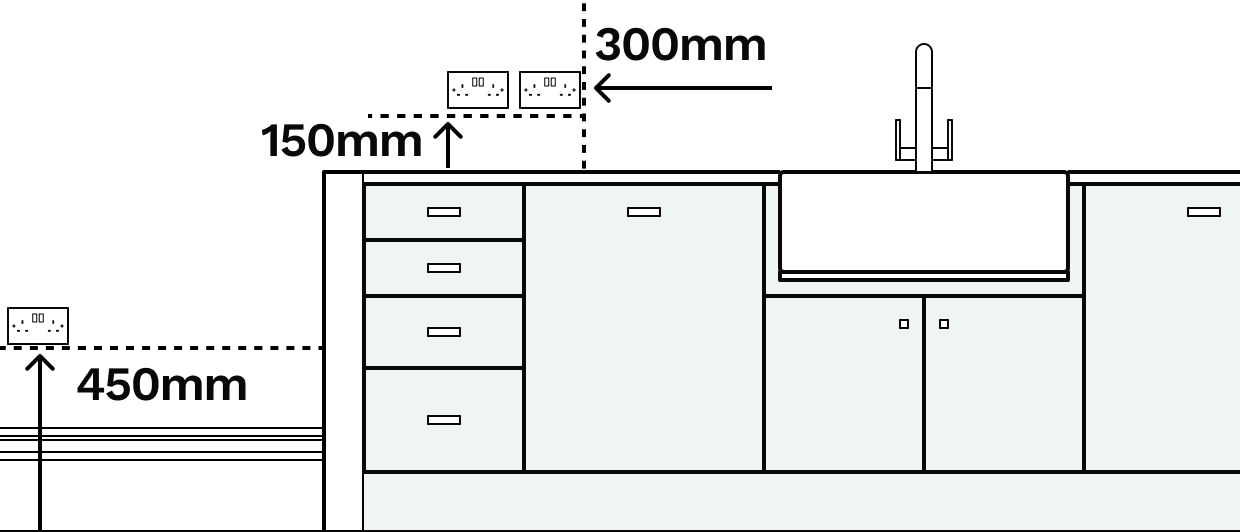
Sockets need to be planned early because they affect both the electrical plan and how the kitchen works day to day.
As a general guide:
- Keep sockets at least 300mm away from sinks and hobs
- Position worktop sockets around 150mm above the worktop
- If you have an upstand, allow around 100mm above that
- In new work, sockets are generally positioned at least 450mm above finished floor level for accessibility
If you are tiling, plan the socket positions before the tiles go on. You want the socket plate to sit neatly on the finished surface, not awkwardly across tile cuts.
Read more: Where to put plug sockets in a kitchen.
Things people do not think about
- Whether appliance doors can open without blocking the main walkway
- Whether someone can stand at the dishwasher while someone else passes behind
- Whether the fridge door can open far enough to remove drawers
- Whether small appliances fit under wall cabinets
- Whether island lights block the view across the room
- Whether sockets line up neatly with tiles or upstands
And a few numbers to keep in mind...
- 900mm minimum clearance between runs of units
- 1000mm to 1200mm ideal clearance where possible
- 450mm to 500mm between worktop and wall cabinets
- 750mm minimum from gas hob to extractor hood, subject to manufacturer guidance
- 650mm often used for electric or induction hobs, subject to manufacturer guidance
- 150mm minimum between hob and side wall or tall unit
- 600mm width per person for island seating
- 300mm island overhang for knee space
- 750mm to 900mm from island worktop to pendant light
- 300mm minimum between sockets and sinks or hobs
Frequently asked questions
How much space should you leave between kitchen units?
You should leave at least 900mm between kitchen units, or between units and an island. If you have the space, 1000mm to 1200mm usually feels more comfortable, especially if more than one person will use the kitchen at the same time.
How much space do you need around a kitchen island?
Aim for at least 900mm clearance around a kitchen island. If the island sits opposite a sink, dishwasher, oven or busy walkway, 1000mm to 1200mm is usually better so doors can open and people can move around comfortably.
What is the distance between a worktop and wall cabinet?
The usual distance between a kitchen worktop and wall cabinets is around 450mm to 500mm. This gives enough space to use the worktop properly while keeping wall cabinets within comfortable reach.
How high should an extractor hood be above a hob?
Extractor hood height depends on the hob and manufacturer guidance. As a rough guide, gas hobs usually need around 750mm clearance, while electric or induction hobs are often around 650mm. Always check the installation instructions before fitting.
How much space should you leave around a fridge freezer?
A fridge freezer needs enough space for ventilation and for the door to open properly. As a guide, allow around 50mm at the back, 20mm to 30mm either side, and extra space on the hinge side if it sits next to a wall.
How much space do you need for seating at a kitchen island?
Allow around 600mm width per person for seating at a kitchen island. You should also allow around 300mm overhang for knee space so people can sit comfortably without being pushed too far back.
How far should kitchen sockets be from a sink or hob?
Kitchen sockets should generally be kept at least 300mm away from sinks and hobs. This helps keep plug sockets away from obvious water and heat risk areas and makes the kitchen safer to use.
How high should pendant lights be above a kitchen island?
Pendant lights over a kitchen island are usually positioned around 750mm to 900mm above the worktop. The right height depends on ceiling height, pendant size and whether the lights block sightlines across the room.
Renovating? Read more...
Kitchen
How to plan the best layout for your kitchen
One of the first steps in kitchen planning is understanding the room's physical features. Start with the walls, doorways, and windows, and work inward...
Kitchen
The essential guide to kitchen islands
Designing the perfect kitchen island starts with getting the spacing just right. From clearance zones to island dimensions, our guide breaks down everything you need to create a functional and stylish centerpiece for your kitchen.
Kitchen
Where to put plug sockets in a kitchen
Planning your kitchen sockets might not be the most exciting part of a renovation, but getting it right makes a huge difference to how easy your kitchen is to use.
Kitchen
Where should bins go in a kitchen?
Bins are one of the most used parts of a kitchen. Get it wrong and you will notice it every day.
Kitchen
Where should appliances go in a kitchen?
A fridge in the wrong place, a dishwasher too far from the sink, or an oven door blocking a walkway will make a kitchen pretty frustrating to use.
Free tools to get started


Join our mailing list and get 10% off
Who are you? *
By signing up, you are agreeing to our Terms and Privacy Policy including receiving emails from us at Reno (you can unsubscribe at any time). Opted out but want back in? Re-subscribe to the mailing list .
Start your renovation with Reno