Help & advice
Where do you put your thermostat?
Last updated: March 10, 2026
Another small, not particularly exciting decision is where the thermostat goes. Most people simply leave it where the old one was, or if installing a new smart thermostat, wherever there happens to be a spare plug.
The position of your thermostat will control how comfortable your home feels and how hard your heating system has to work, so it's worth a minute to work out the right place to have it installed.
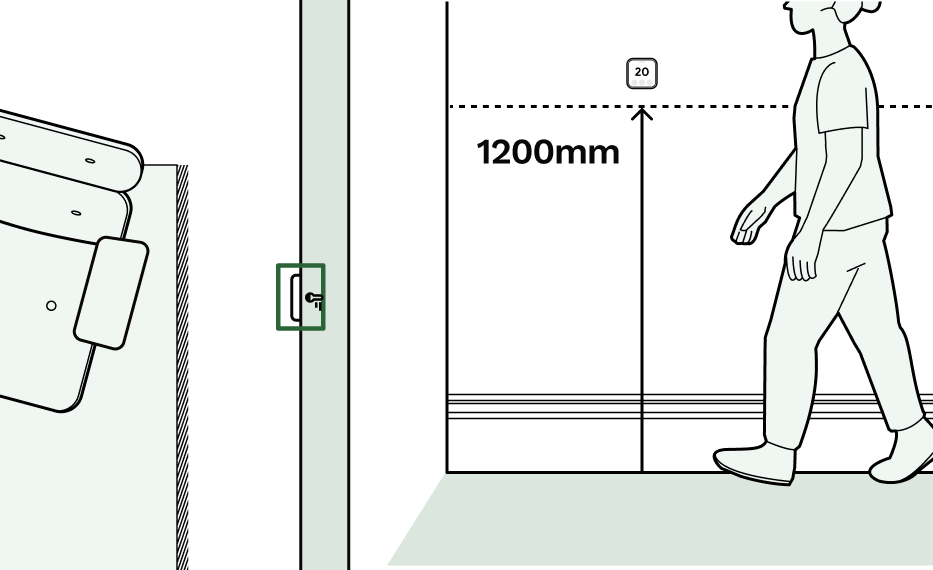
The basic rules
- A thermostat should be somewhere that reflects the average temperature of your home - not the warmest or coldest spot
- Around chest height - ~ 1.2 to 1.5 metres above the floor
- On a clear section of wall - not hidden behind doors or furniture
- Away from anything that artificially warms or cools it i.e. not near the front door or the oven, or above a radiator or near a fireplace or in front of a sunny window!
- ... and avoid putting it in a room where a thermostatic radiator valve could conflict with it

Places to avoid
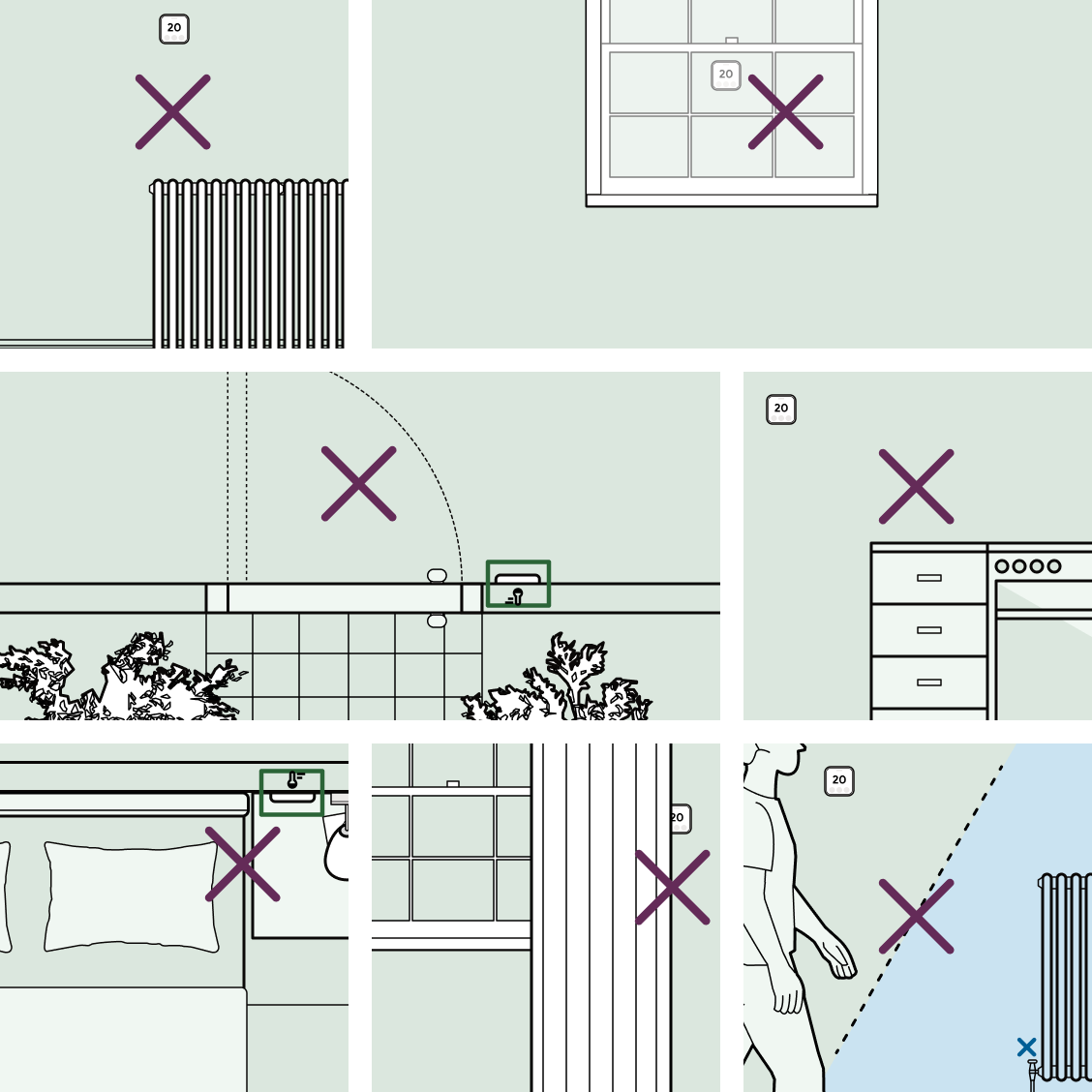
- Directly above a radiator - The thermostat warms up too quickly and shuts the heating off before the rest of the house is actually comfortable
- In direct sunlight - The sun will trick the thermostat into thinking the room is warmer than it is
- Near draughts or external doors - Cold air makes the heating stay on longer than necessary
- In kitchens or bathrooms - Steam, cooking heat and temperature swings make the thermostat's current temperature reading completely unreliable for the rest of the house
- Hidden behind furniture or curtains - If air cannot circulate properly around the thermostat, the temperature reading will be inaccurate
- Bedrooms - Usually not ideal. Bedrooms are often cooler than the rest of the house and you spend less waking time there. It's usually better to adjust the radiator valve instead
- In a room where the radiator is turned off - If the radiator in that room is not heating properly, the thermostat will keep calling for heat even though the rest of the house may already be warm
So where do I put the thermostat?
Assuming you have a single thermostat, you want it somewhere that genuinely reflects the general temperature of the home.
- Downstairs (heat rises)
- On an inside wall away from draughts
- Living room is a good spot - somewhere in the middle of your home
- Hallways can work well - unless they are much colder than the rest of the house / too close to the front door
Open plan space? Go for somewhere that is representative of the whole space, is not right next to glazing or doors or going to be influenced by cooking or appliances.

Thermostats and different temperatures for different rooms
You can control the temperature in individual rooms with traditional radiators using thermostatic radiator valves (TRVs). Most radiators in a home will have one of these fitted so that each room can regulate its own temperature. The numbered settings you see (1, 2, 3, 4 etc.) roughly correspond to different temperature levels.
You'll usually find that the radiator in the same room as the main thermostat doesn't have a thermostatic valve, so the thermostat can control the heating for the whole system without the radiator switching itself off early.
Smart thermostatic radiator valves take this further, allowing you to set different temperatures in different rooms at different times of day.
Even with smart controls, the location of your main thermostat still matters. It should sit somewhere that reflects the general temperature of the home, not the warmest or coldest spot.
Choose a spot that reflects the real temperature of the home, not one that is simply convenient for wiring.
Because once everything is finished, who moves a thermostat?
Frequently asked questions
Where should a thermostat be placed in a house?
A thermostat should be placed in a location that reflects the average temperature of the home, usually in a regularly used living area on an internal wall. It should sit around 1.2–1.5 metres above the floor and away from heat sources, draughts, sunlight and radiators.
Can you put a thermostat above a radiator?
No, a thermostat should not be placed above a radiator. Heat from the radiator can warm the thermostat too quickly, causing the heating system to switch off before the rest of the house has reached temperature.
What height should a thermostat be mounted?
Around chest height, typically between 1.2 and 1.5 metres above the floor. This height allows the thermostat to measure room temperature accurately and keeps it accessible for adjusting settings.
Should a thermostat be in a hallway or living room?
A thermostat can be placed in either a hallway or a living room, as long as the location reflects the general temperature of the home. Living rooms are often ideal because they are used regularly, while hallways work well if they are not significantly colder than the rest of the house.
Should a thermostat be upstairs or downstairs?
In most homes the thermostat is better downstairs, because heat naturally rises. If the thermostat is upstairs it may switch the heating off before downstairs has reached a comfortable temperature.
Why shouldn't a thermostat be placed in a kitchen or bathroom?
Thermostats should not be placed in kitchens or bathrooms because cooking heat, steam and sudden temperature changes cause inaccurate readings, making your heating switch on or off at the wrong time and making the rest of the home less comfortable.
Can you move a thermostat to another room?
Yes, a thermostat can usually be moved, but it may need new wiring. If you are renovating, it is a good opportunity to relocate it to a better position before decorating is finished.
How far should a thermostat be from a radiator?
A thermostat should not be placed directly above or next to a radiator. Heat from the radiator can cause the thermostat to think the room is warmer than it really is, which may shut the heating off too early.
Can a thermostat be placed near a window?
It is best to avoid placing a thermostat near a window. Cold air and draughts can make the thermostat think the room is colder than it actually is, causing the heating to run longer than necessary.
Should every room have its own thermostat?
Most homes have one main thermostat controlling the heating system. Individual room temperatures are usually adjusted using thermostatic radiator valves (TRVs) or smart radiator valves.
Do smart thermostats still need to be positioned carefully?
Yes. Even smart thermostats need to be placed somewhere that reflects the real temperature of the home. Poor placement near heat sources, draughts or sunlight can still affect how accurately they control the heating.
Why does thermostat location matter?
Thermostat location matters because it determines when the heating switches on and off. If it is placed in a spot that is warmer or colder than the rest of the house, the heating system may run inefficiently or leave some rooms uncomfortable.
Renovating? Read more...
All rooms
Where do you want the radiators?
Once the pipes are in, you will live with that decision for years to avoid having to move the bed or have the floor taken up again… so it's worth planning ahead where you actually want the radiators to be and why!
Bathroom
Should I consider underfloor heating for my bathroom?
Adding underfloor heating to your bathroom can transform it into a cosy, comfortable oasis, especially during chilly mornings.
All rooms
Where do you want the light switches?
Understanding the reasons behind where the light switch goes for bathrooms and ensuites in the UK.
Bedroom
Mastering bedroom lighting, what do I need to know?
One thing that everyone seems to agree on is to make sure you have different types of lighting in your bedroom, also known as layering.
Dining
How to effectively light your dining room
Lighting plays a crucial role in setting the right mood and functionality in your dining room.
Bathroom
Why is the bathroom light switch outside the bathroom?
Understanding the reasons behind where the light switch goes for bathrooms and ensuites in the UK.
Lounge
How many lamps in a living room?
Figuring out how many lamps you need in a living room isn't about strict formulas or calculators. You could go down the lumen calculator route…
Free tools to get started

Join our mailing list and get 10% off
Who are you? *
By signing up, you are agreeing to our Terms and Privacy Policy including receiving emails from us at Reno (you can unsubscribe at any time). Opted out but want back in? Re-subscribe to the mailing list .
Start your renovation with Reno