Help & advice
Where to put sockets in a bedroom (and how many you need!)
Last updated: March 02, 2026
At some point you'll be asked where you want your sockets in your bedroom, and it pays to have a plan rather than live without being able to charge your phone on one side of the bed or plug in a lamp in that dark corner!
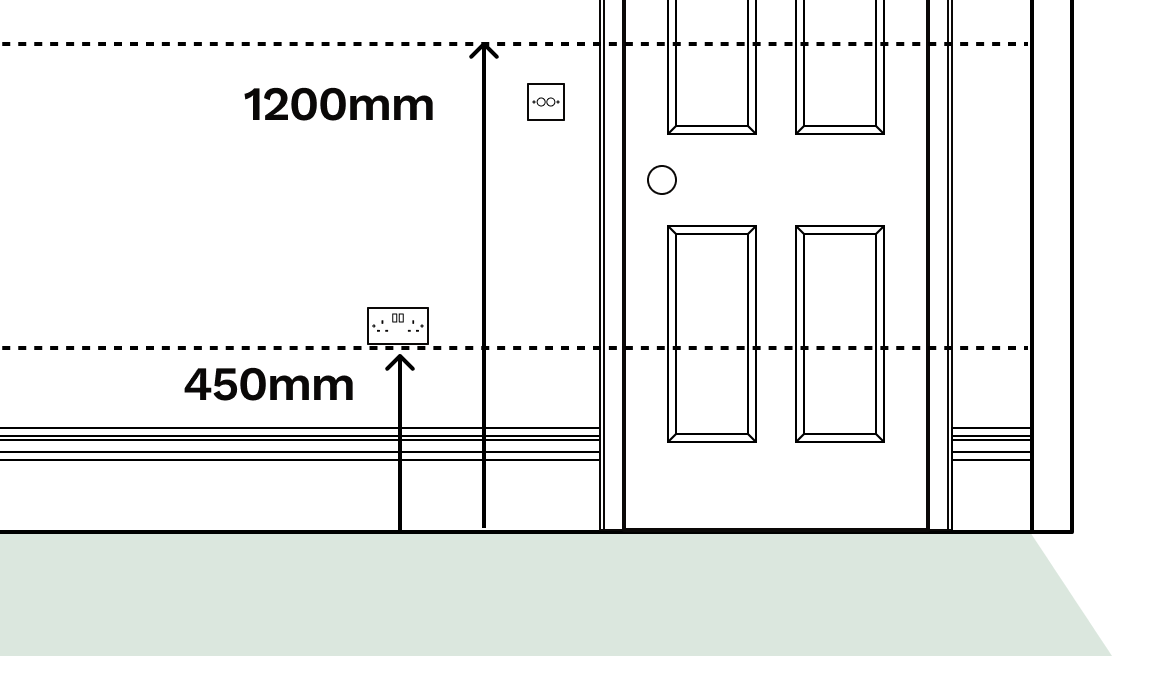
The quick summary? Start with four doubles, add more for a desk/TV/dressing table. Bedroom socket height in the UK is usually 450mm from the floor with light switches around 1200mm (bedside light switch height can drop lower for comfort around a headboard). Plan electrical points in the bedroom at each bedside and near corners so you don't end up short on outlets.
So, where should your sockets go? Here's how to get it right.
Start with the bed
Your bed is basically the anchor of the room, so work from there. You'll want a socket on either side, positioned just below and slightly to the side of your bedside tables. This keeps cables neat and stops them from becoming an eyesore. Remember to check the dimensions of your finished bed i.e. including headboard / the width of the base, not just the mattress!
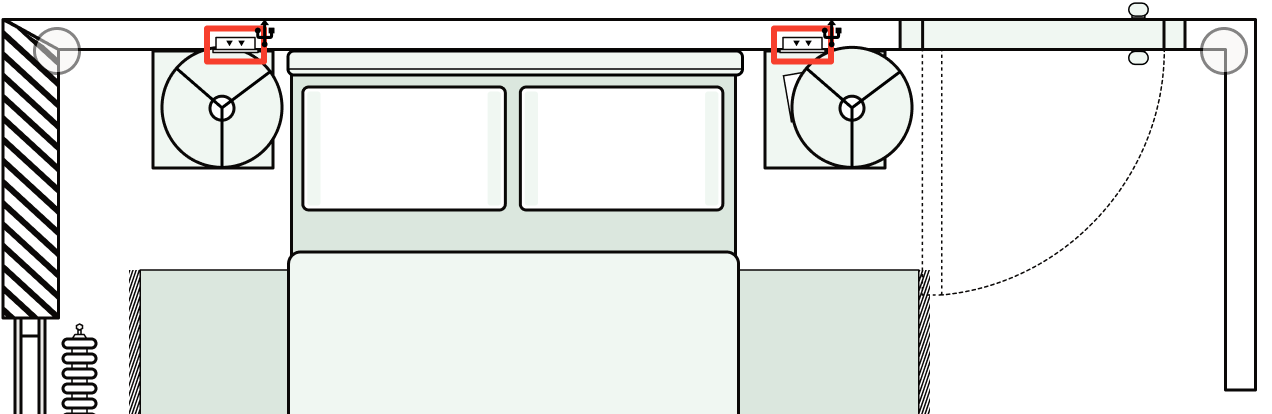
Then think about what your 'other' areas are
Bedrooms aren't just for sleeping - you might have a dressing table, a space to work from home, or even a reading area. Plan ahead for these with your sockets:
Dressing area
A socket nearby makes it easy to plug in a hairdryer, straighteners, or a mirror with built-in lights.
Working from home
Laptops, chargers, and desk lamps all need power, so avoid trailing cables by placing sockets within easy reach.
TV wall
If you're mounting a TV, install a high-level socket so cables don't dangle down the wall.

UK regulations
Building regs in the UK state that sockets should be at least 450mm from the floor, and light switches should be within 1200mm of the floor. This keeps everything within easy reach, whether you're standing or sitting. Good to know when you're putting your plan together! Always use a qualified electrician who will keep you right.
The magic of a corner socket
Ideally, have at least one socket near each corner of the room, far enough from the wall edge that it's still within comfortable reach. This gives you ultimate flexibility for lamps, fans, or even vacuuming without hunting for an outlet.
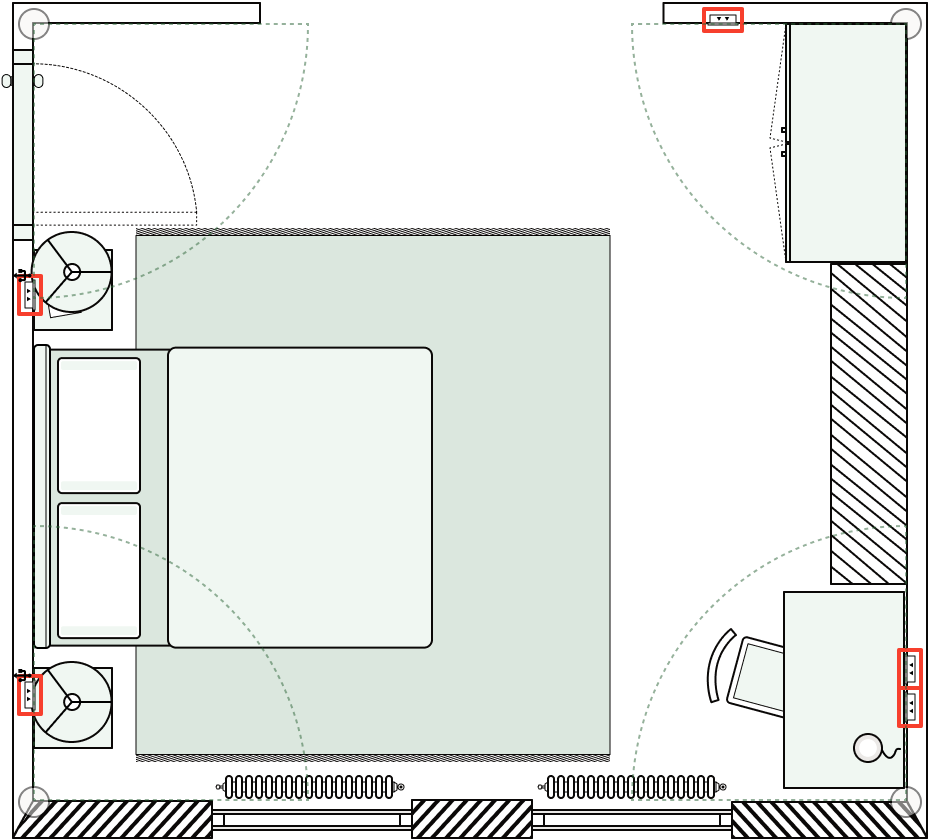
All that said and done… just think about how you'll use the room before the electrician shows up! A little planning now means no awkward cable runs later - and a bedroom that works for you, not against you!
Frequently asked questions
How many plug sockets should a bedroom have?
There's no strict rule, but a good starting point is at least four double sockets. If you have a larger room or extra devices like a TV, desk, or dressing table, add more.
Where should I put plug sockets in a bedroom?
Start by placing a socket on either side of the bed, slightly below and to the side of your bedside tables. Then, plan sockets near key areas like a dressing table, desk, and TV wall to avoid trailing cables. A socket near each corner of the room is also useful for lamps and general flexibility.
What height should sockets be in a bedroom?
UK building regulations state that sockets should be at least 450mm from the floor, while light switches should be within 1200mm of the floor to ensure easy access.
Do I need a high-level socket for a wall-mounted TV?
Yes, if you're wall-mounting a TV, install a high-level socket behind it. This keeps cables hidden and avoids messy trailing wires.
Should I put sockets in the corners of my bedroom?
Absolutely! Corner sockets provide flexibility for lamps, fans, and future furniture rearrangements. Just make sure they're a comfortable distance (around 350mm) from the wall edge for ease of use.
Renovating? Read more...
Bedroom
Planning the best layout for your bedroom
Sometimes it can be helpful to start from the outside and work your way in.
Bedroom
How to elevate your bedroom design
3 ways to make your bedroom design more sophisticated, explained by an interiors editor
Bedroom
Mastering bedroom lighting, what do I need to know?
One thing that everyone seems to agree on is to make sure you have different types of lighting in your bedroom, also known as layering.
Bedroom
How to add an ensuite bathroom to a small bedroom
This requires careful planning and design to make the most of the available space. Here are some key considerations...
Bedroom
What flooring is best for a bedroom
When choosing what flooring to have, consider how it will feel under foot, think about noise issues and how you want to feel in the room.
Bedroom
Creating a mood board for your bedroom design
Start from the bottom, be a thief, follow your eye, create zones and follow some rules!
All rooms
Where do you want the radiators?
Once the pipes are in, you will live with that decision for years to avoid having to move the bed or have the floor taken up again… so it's worth planning ahead where you actually want the radiators to be and why!
Bedroom
Where should wardrobes go (and how deep should they be)?
They take up more space than people expect and have a big impact on how the room works, your lighting plan and where your sockets and switches are. Even which way your door opens!
All rooms
What needs to be decided before first fix?
Pipes and cables are installed inside walls and floors, so changes become expensive and disruptive.
Lounge
Where to put plug sockets in a living room
Plan living room sockets around your sofa, TV, lamps and charging spots so you avoid extension leads and end up with power exactly where you need it.
Free tools to get started


Join our mailing list and get 10% off
Who are you? *
By signing up, you are agreeing to our Terms and Privacy Policy including receiving emails from us at Reno (you can unsubscribe at any time). Opted out but want back in? Re-subscribe to the mailing list .
Start your renovation with Reno