Help & advice
Bathroom layout rules you didn't know you were breaking
Last updated: March 27, 2026
Most bathroom layout problems are not about taste. They come from not knowing about (or ignoring!) a handful of rules around space planning, plumbing, electrics and day to day use.
The difficult part of all of this is that these rules are not normally written down in one place. They are across building regs, the minds of our plumbers and installers and the lessons people only learn once it is too late.
We've pulled those rules together into one place so that you can sense check your layout before anything is fixed! For exact measurements, heights etc. we've linked out to those guides where it makes sense.
1. Not leaving enough space around your toilet, basin, shower and bath
One of the most common layout issues is technically fitting everything in, but not leaving enough room to actually use it comfortably.
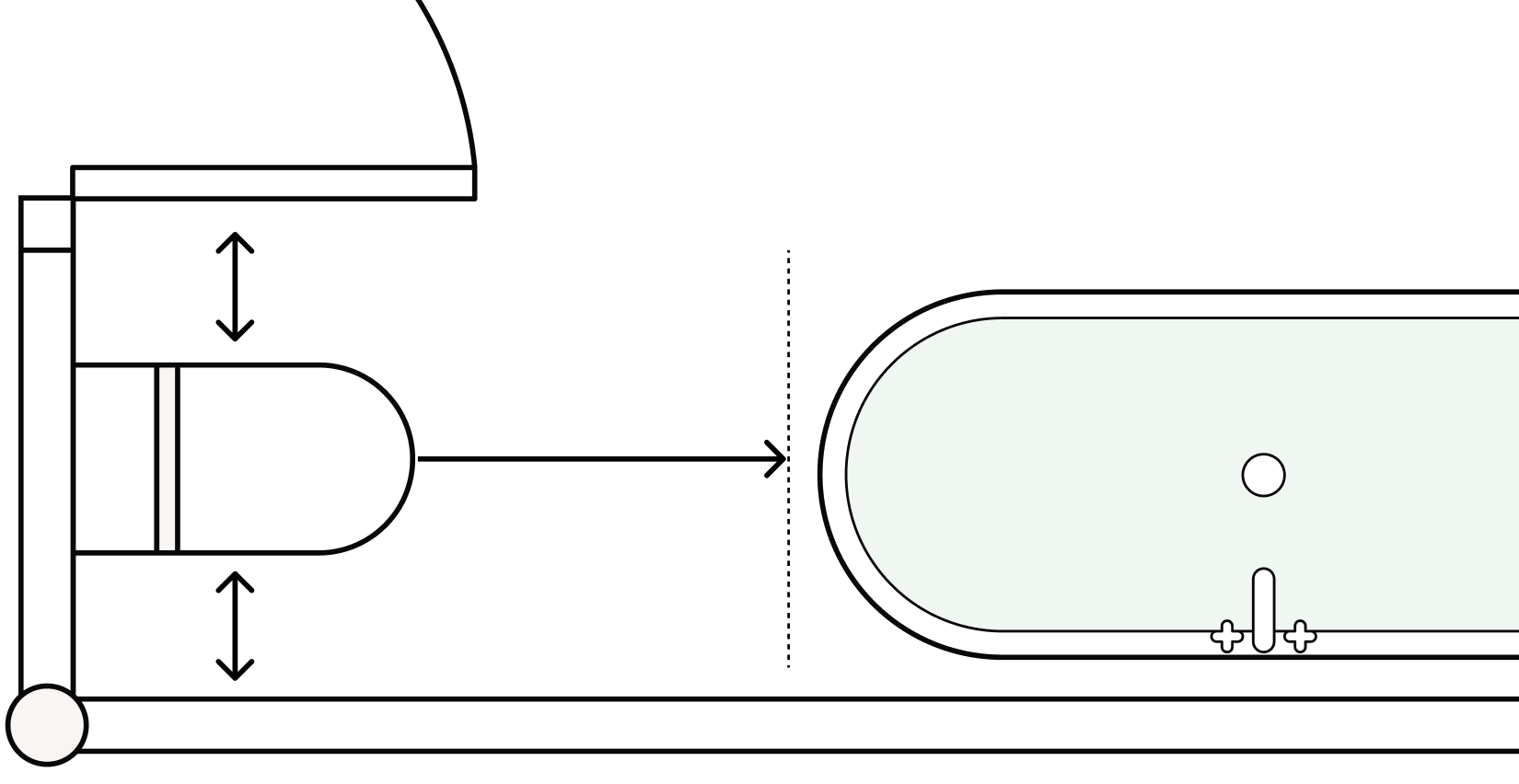
Problems usually show up as:
- Knees hitting the basin when sitting on the toilet
- Vanity drawers not opening fully
- Shower doors not opening fully / clashing with toilets or towel rails
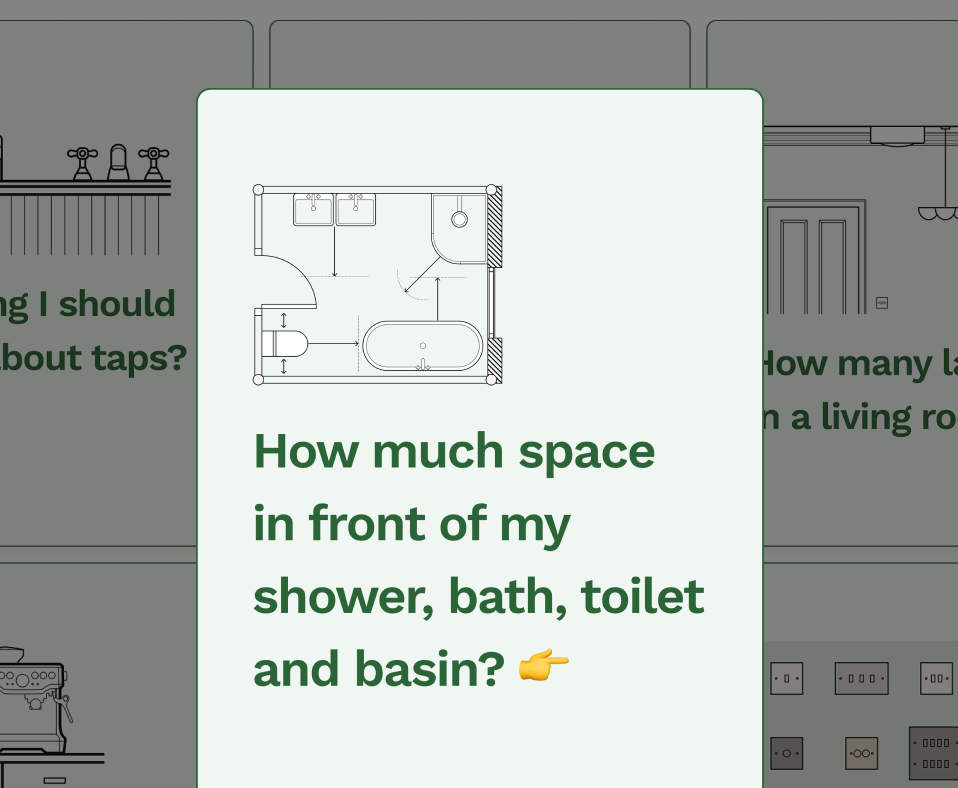
Rule of thumb is 700mm in front of a toilet, shower, bath etc. - get into the specific numbers in our guide on dimensions and understanding the space needed around your bathroom items.
The key thing here is to sanity check your distances between showers, baths, basins and toilets against the guidelines.

2. Forgetting about the door swing
Bathrooms are generally tight on space so extra important not to forget to include your doorway, door frame and door opening in your plan from the beginning otherwise your door:
- Hits the toilet or basin and then your plumbing needs a do-over
- Blocks access to storage
- Makes the room feel smaller than it is
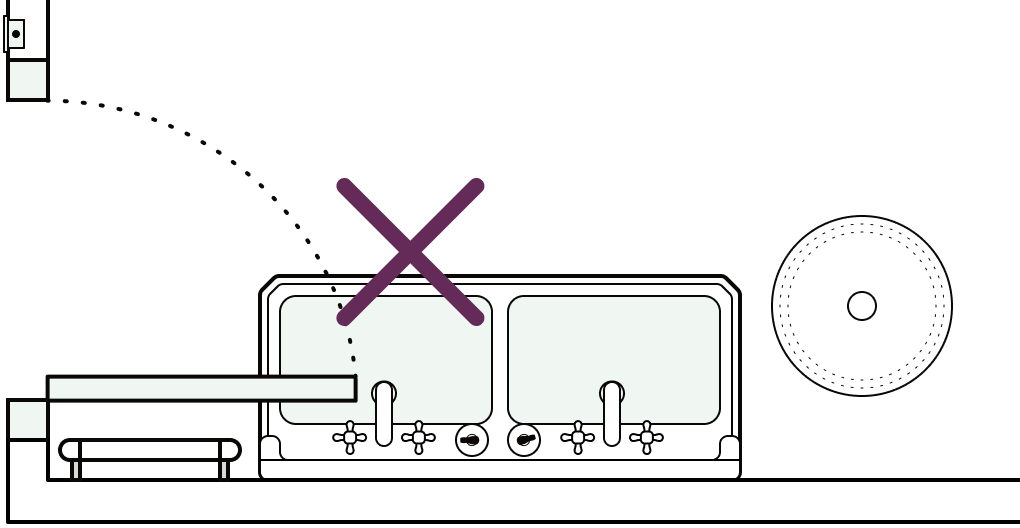
A pocket sliding door can make a big difference, but it's not automatically the right answer without doing a bit of planning as walls are rarely empty (and there' also what you are planning to add too i.e. wall mounted taps, wall lights, shower controls?)
You may have thought about an outward opening door instead, but that often won't work as it's going to get in the way in a hallway or landing, could be a unsafe especially at the top of the staircase but even just the risk of hitting your family members in the face is enough to put us off this one!

3. Moving a toilet without understanding drainage limits
Many layout issues start here. So, yes toilets can be moved. But not easily, cheaply or without compromise - really it comes down to very intentional planning.
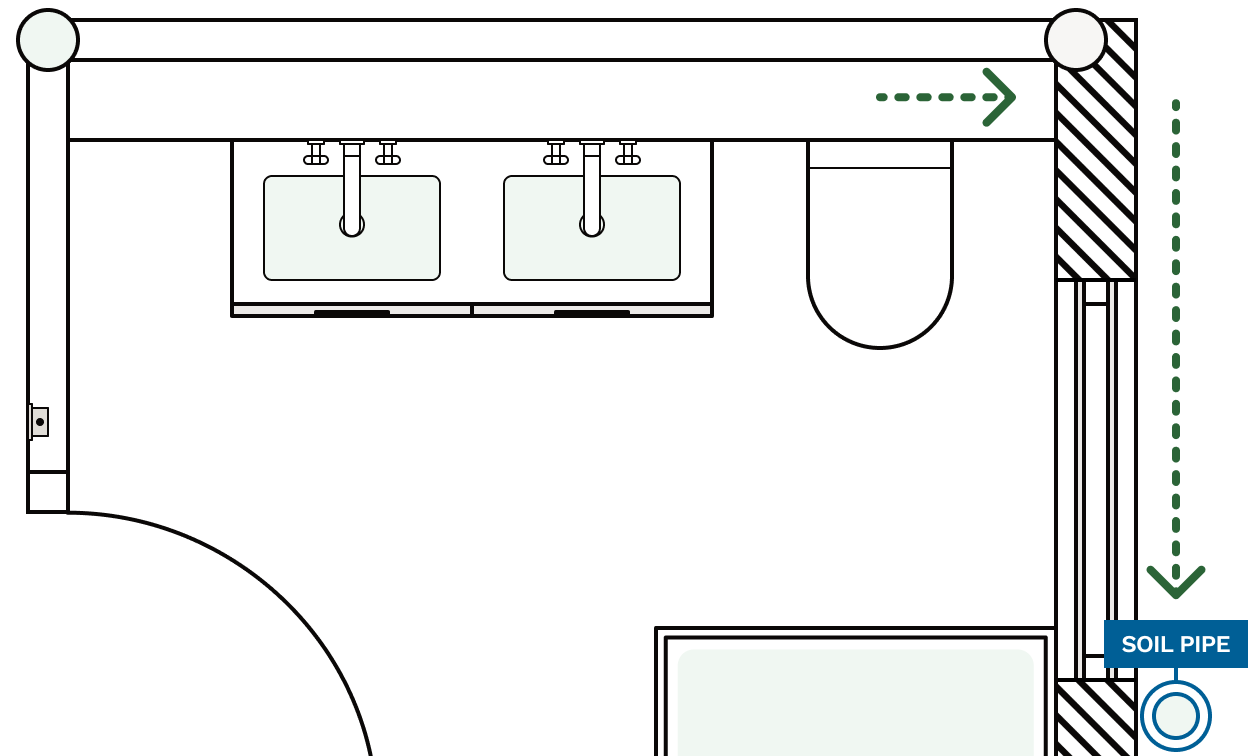
Common mistakes:
- Long horizontal waste runs without enough space for the waste to fall (you want 18mm to 90mm per metre fall)
- Boxing in large pipes to make layouts work without thinking about what that does to your floor space
- Getting stuck on a plan that ultimately is going to blow your budget with not-planned-for structural adjustments
If your layout depends on moving a toilet, you need to plan out your options in detail. Work out where the soil pipe is (hidden means complicated which means expensive), sanity check gravity will run in your favour, have an idea as to how this would affect your floors and walls and fully plan around it. A boxed in soil pipe can be a great opportunity to create additional shelved storage when planned right!
Here's everything to think about for moving a toilet (and why it is a big decision).
4. Putting the shower where drainage will struggle
Showers drain using gravity. If the drain is not in a position where the floor can be formed with enough slope, water can struggle to drain away and start to pool.
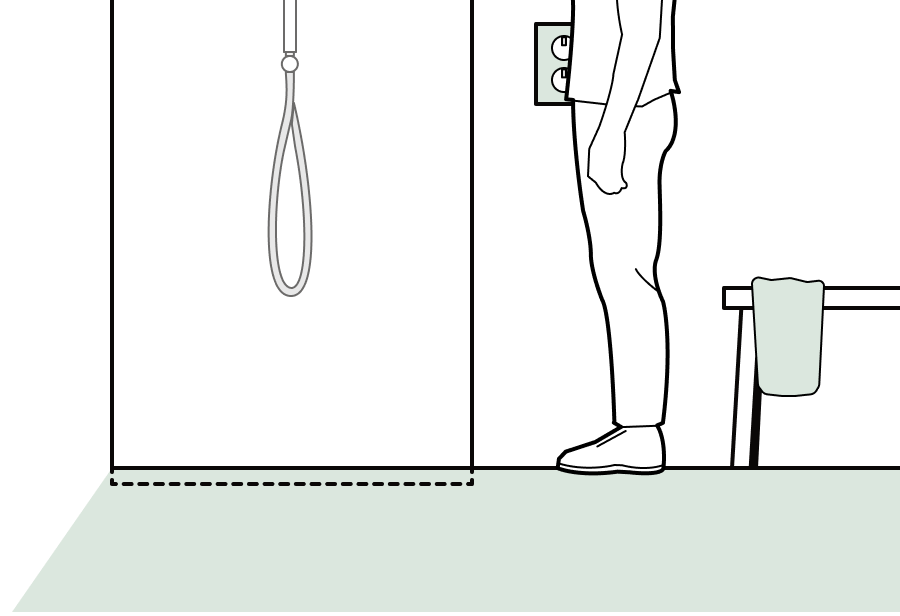
This is especially common in older buildings with wet room showers. Quite often the water takes too long to drain, leaving you standing in a lovely shallow puddle(!). In many cases this comes down to the structure below. Timber joists under the original floor may not leave enough depth to create a decent fall without major work.
Typical problems:
- Not enough of a fall for the waste
- Wet rooms added upstairs without enough floor build up
The structure of the building matters just as much as the design of the bathroom and is something you will need to be prepared to think about with your trades on site - building regs in the UK state a minimum of 18mm per metre fall to ensure water drains away efficiently.
If opening up the floor reveals that achieving proper drainage would mean excessive build-up or structural work, a shower tray might be more practical than a wet room. It is usually slightly higher, but it helps create the fall needed for good drainage.
Wet rooms are likely to consume more water, and in our experience get colder faster than an enclosed shower, so the enclosed shower with tray is the more water and energy efficient option.
5. Ignoring bathroom electrical zones
Bathroom lighting and electrics have strict safety rules in the UK, for good reason!
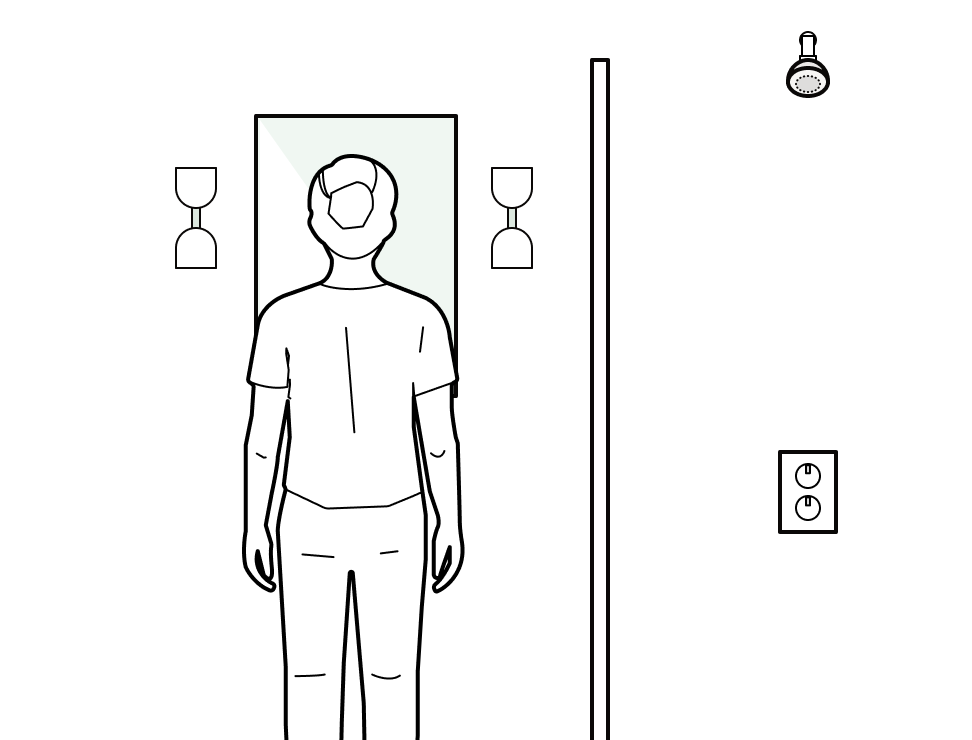
Classic layout mistakes include:
- Light switches in the wrong places
- Specific lights planned for / bought without checking IP ratings
If you are not clear on zones, our guide to bathroom lighting and electrical zones explains what is allowed where and why.
6. Forgetting ventilation when planning the layout
The point here is layout choices affect how well your extractor fan / ventilation actually works.
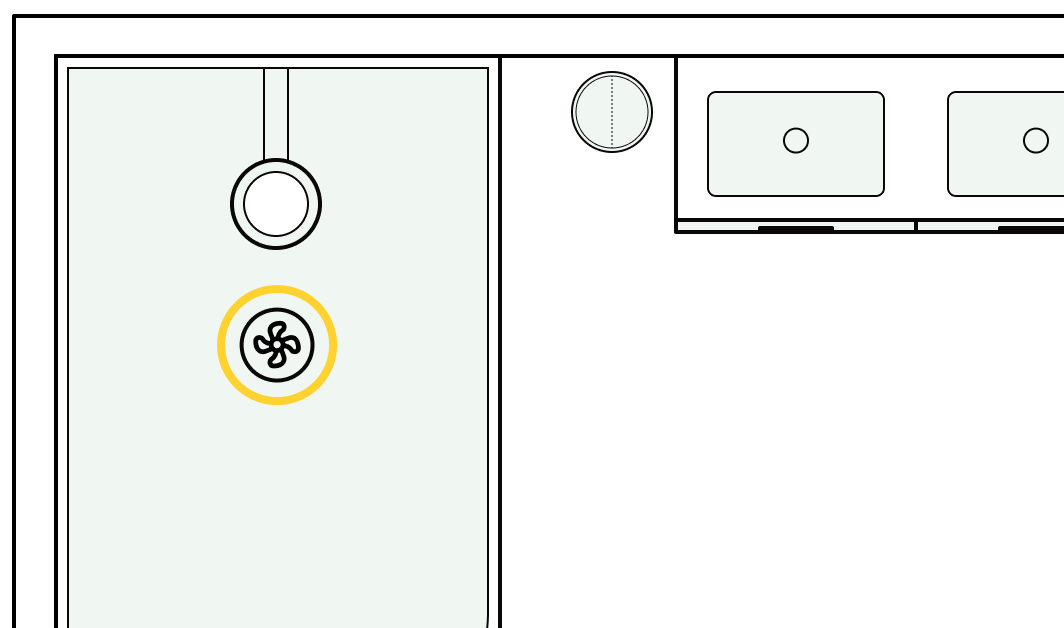
Common issues:
- Extractor fans placed too far from showers or baths
- Assuming a window is enough (relying on opening the window all the time will effect the temperature of your home!)
When it comes to planning where to put your extractor fan in your bathroom renovation plan, having one placed above your bath or shower would be a great way to remove steam quickly. Poor ventilation will lead to mould and peeling paint! If you are choosing a fan, our guide on which bathroom extractor fan to choose is a good starting point.
7. Totally forgetting everyday storage
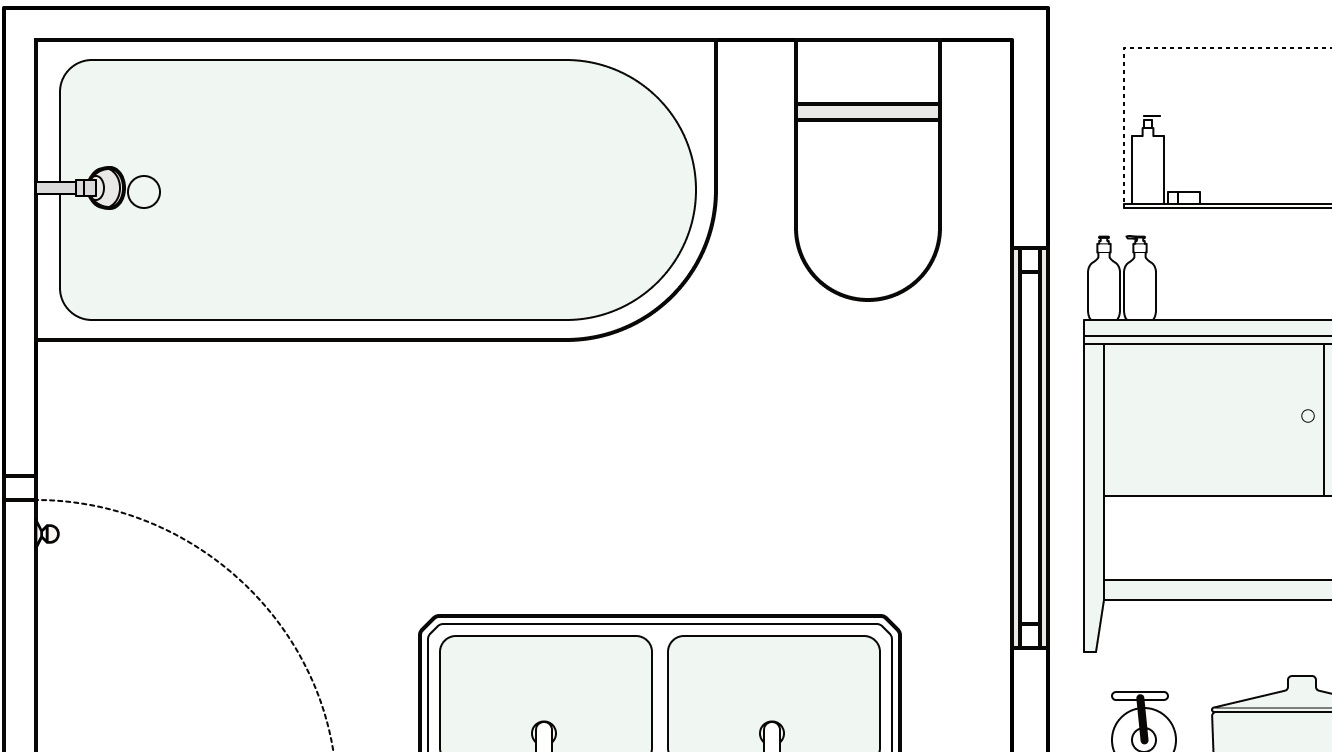
Mistakes:
- No obvious place for loo roll
- Towel rails too far from showers
- Cleaning products with nowhere to go
These aren't finishing touches - they will affect how happy you are with the end result. Having these things in easy reach should be planned at the same time as fixtures, not added afterwards.
We have a few recommendations, especially if you have a small bathroom.
8. Getting heights wrong across the room
Bathroom layouts are not just about where things go in a floor plan, but also how high!
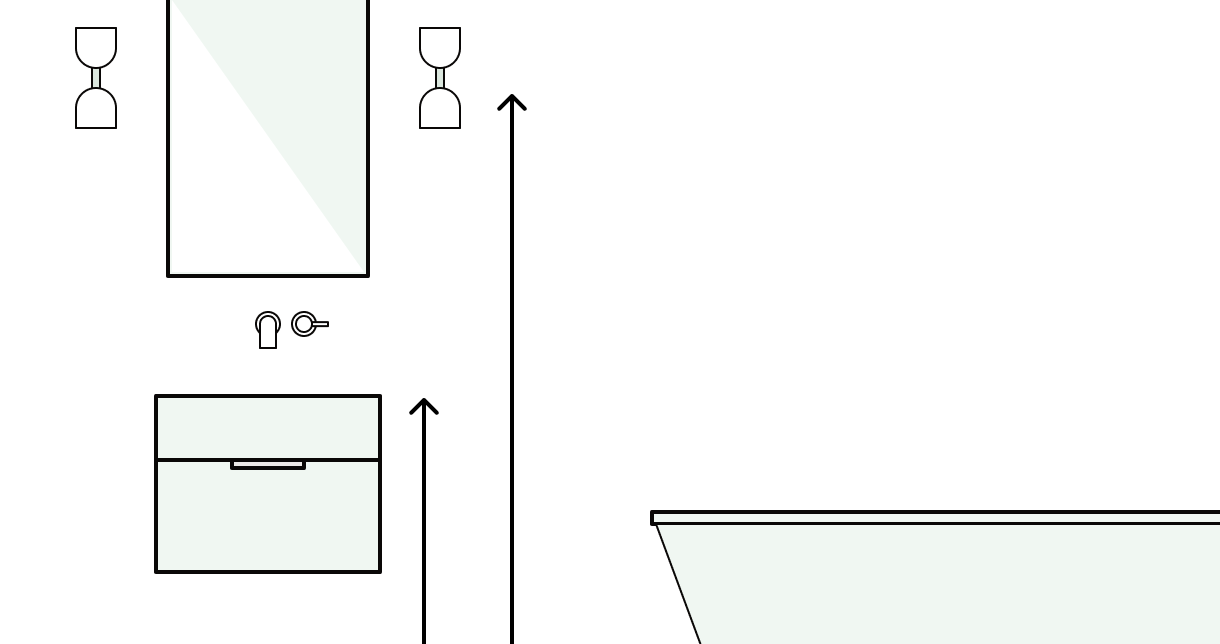
Mistakes here:
- Basins set too low or too high for the whole household
- Wall lights that are too high and give you harsh shadows
- Shower controls placed inside the water spray (ok maybe that's not technically about height but, still, avoid!)
Most of this is about common sense, and a bit of acting it out to sanity check your heights. Want the numbers? Our guide on what height for which bathroom fixtures breaks these down.
9. Treating small bathrooms the same as big bathrooms
Furniture / baths / toilets / basins that work in a large bathroom don't automatically work in a smaller space - there are loads of things you can do to optimise for a small bathroom.
Common mistakes:
- Hinged screens where sliding would work better
- Floor standing units where wall hung would free space
- Too many visual breaks, making the room feel tight
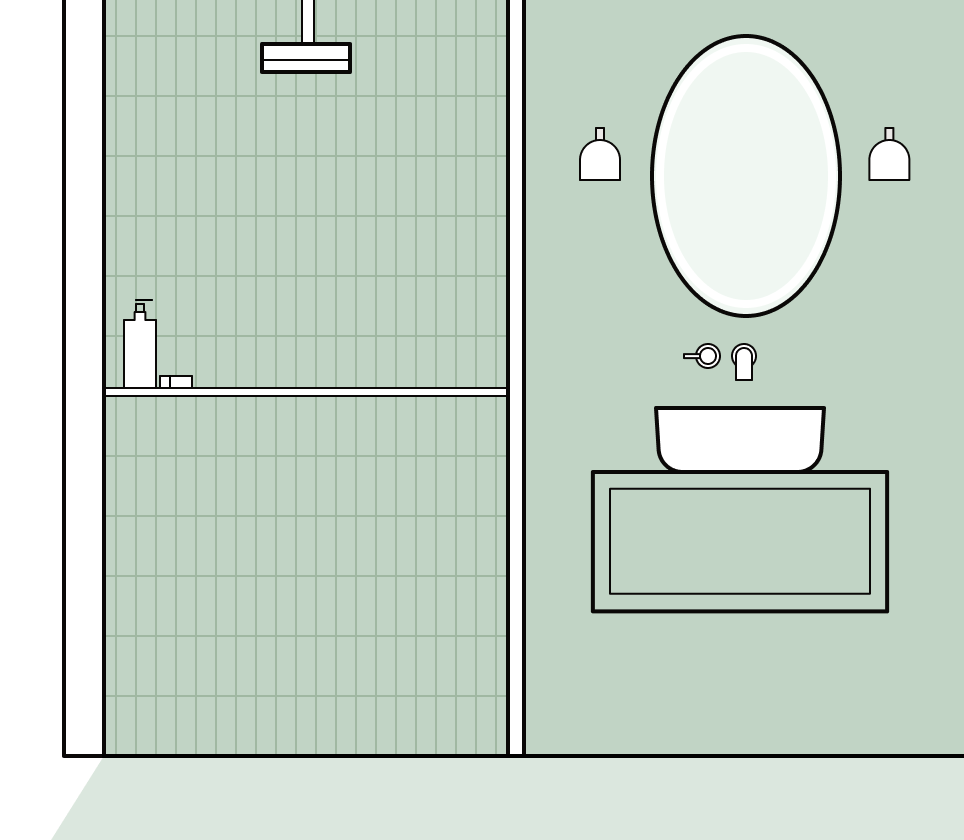
Planning a small space? Check out our guide on what I can do to make the most of my small bathroom space .
10. Not thinking about how fixtures connect
Layout could look great but still not work out for the build if:
- Tap or shower choice is impossible without major boxing (think especially about concealed, wall mounted taps and showers - where's the pipework going?)
- Maintenance access is forgotten (there's a reason toilet flush plates are so big, or that there's a moveable shelf above the cistern for the push / lever flushes)
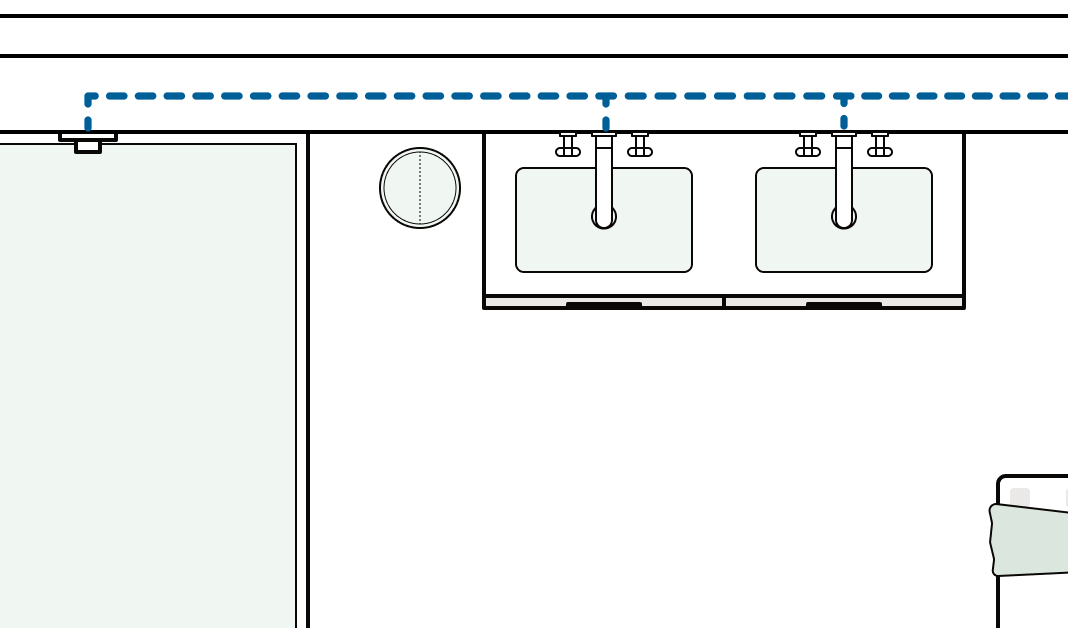
This is why installers often question layouts that look fine to homeowners. Good bathroom design considers what is behind the walls as well as what you see.
How to avoid breaking the rules by accident
Come up with a few alternative layouts to get you started, and make sure you go to the full extent of planning everything from that loo roll storage to heights and pipe runs.
Everything on Reno has a default starting height based on UK standards, but measure it all out yourself for your own piece of mind to get it right first time, without any major do-overs and avoid paying for a renovation project that falls short of what you were hoping for.
Frequently asked questions
How much clear space do I really need in front of a toilet, basin or shower?
Aim for 700mm of clear floor space in front of each fixture so you can actually use it comfortably. Our bathroom dimensions guide lists the recommended and minimum spans for every item.
Do I have to move the toilet to fix my layout?
Only if you must. Toilets rely on gravity, so every extra bend or horizontal run adds cost and risk. Before deciding, find the soil stack, check you have fall for the waste, and think about boxing and floor build-up. Sometimes a short boxed soil pipe that doubles as a shelf is cheaper and neater than a full relocation. Read more about why moving a toilet is a big decision.
Should the bathroom door swing in or out?
Inward is standard, but it must clear the basin and toilet without pinching circulation. If it doesn't, a pocket sliding door is usually the cleanest fix. Outward swing is a last resort (it can block the landing or smack someone on the stairs). Measure the door arc on your plan and adjust the layout before you commit (and tile!).
Can I do a wet room upstairs?
Sometimes, but check the structure first. Timber joists often don't leave enough depth for the fall you need to the waste, which is why upstairs wet rooms can end up with pooling water. If the build-up is tight or the waste run is long, a low-profile tray with a decent fall is usually the safer, drier option.
Where should the extractor fan go in the layout?
As close to the moisture source as you can manage, with the shortest duct run. Over the shower or opposite the shower door works well; avoid long, kinked ducts that crawl around boxing or upstairs landings. If you're moving fixtures, recheck the fan position so steam isn't trapped in a dead corner. Read more about choosing the right extractor fan.
Renovating? Read more...
Bathroom
Answering 'how high do you want the...' for bathroom renovations
At some point during your bathroom renovation (the earlier the better) you'll find yourself holding a shower head, standing in your socks in a dusty / partially unwrapped bath, wondering: Wait... how high should this go?
All rooms
Save money, save energy and save water from your renovation.
You've got the vision for your dream room - colours, tiles, that perfect finish. But have you thought about how it's going to perform?
Bathroom
Why moving a toilet is a big decision
It will add to the overall time required to complete the project, which, in turn, increases the cost.
Bathroom
Dimensions and understanding the space needed around your bathroom items
You'll want at least 700mm of clear floor space in front of your basin, toilet, shower, or bath - basically enough room to use them comfortably.
Bathroom
Can you add an ensuite to a small bedroom?
This requires careful planning and design to make the most of the available space. Here are some key considerations...
Bathroom
Which bathroom extractor fan to choose?
Ready for the day you have to make that unknown decision (or now that you know, earlier) we've summarised the trade offs you'll need to make when it comes to deciding on an extractor fan for your bathroom.
Bathroom
Choosing the right size and type of over bath shower screen
When it comes to installing an over-bath shower screen, size is everything. Too small, and you'll end up with a soggy bathroom floor; too large, and you’ll struggle to get in and out of the bath. Here’s how to nail the perfect fit for your bathroom.
Bathroom
Choosing bathroom tiles? All the things to think about
Planning to do up your bathroom and finger hovering over the order button after spending nights on Pinterest?
Bathroom
Which bathroom taps to choose?
This is one of those decisions most people make based on what looks good on Pinterest, without really thinking beyond that. Taps are one of the most used items in a bathroom, so they are exactly the sort of thing you can end up regretting later if you get it wrong.
All rooms
Where do you want the radiators?
Once the pipes are in, you will live with that decision for years to avoid having to move the bed or have the floor taken up again… so it's worth planning ahead where you actually want the radiators to be and why!
Bathroom
What all the things mean when choosing a shower
Thermostatic valves, pressure, flow rates, concealed vs exposed, twin outlets, rainfall heads… and it's not obvious what any of it really means or what matters.
Bathroom
What needs to be waterproofed in a bathroom?
Tiling a bathroom does not make it waterproof. The waterproofing sits behind the visible finish and protects the structure of your home.
All rooms
How to budget for a home renovation
A practical guide to building a renovation budget from the scope, plan, quantities, quotes and contingency rather than guesswork.
Free tools to get started

Join our mailing list and get 10% off
Who are you? *
By signing up, you are agreeing to our Terms and Privacy Policy including receiving emails from us at Reno (you can unsubscribe at any time). Opted out but want back in? Re-subscribe to the mailing list .
Start your renovation with Reno