Help & advice
How to plan a home renovation project from start to finish
Last updated: July 25, 2026
Planning a renovation from start to finish involves a lot of decisions, a lot of money talk, dust and typically lots of those moments where someone asks where something like a socket is going and everyone looks at each other.
The good news is that most renovation problems do not come from one huge mistake.
They usually come from a lot of small things being unclear, and it all adds up. You want to be really clear on:
- What is actually being changed
- What is included in your quotes
- All of those layout decisions before first fix
- Who is supplying what
- When things need to be ordered by
- What happens if something changes
So the aim is not to create a perfect plan that never changes.
You cannot predict everything, like discovering rotten joists, but you can make enough of the predictable decisions early so the project has something solid to work from.
1. Start with what you want the renovation to change
Before you get into products, builders, tiles, paint colours or Pinterest boards, work out what the renovation is actually meant to solve.
Ask yourself:
- What is not working now?
- Who uses the space?
- What needs to function better day to day?
- Are you renovating for yourself or to sell?
- Is this a cosmetic update or a bigger layout change?
- What absolutely has to happen?
- What would be nice if the budget allows?
This is where a needs and wants list helps.
Needs are the things the renovation has to deliver. Wants are the things you would love, but could compromise on. That distinction becomes very useful later when budget, space or build constraints start making decisions for you.
Get started with our free template renovation planner.
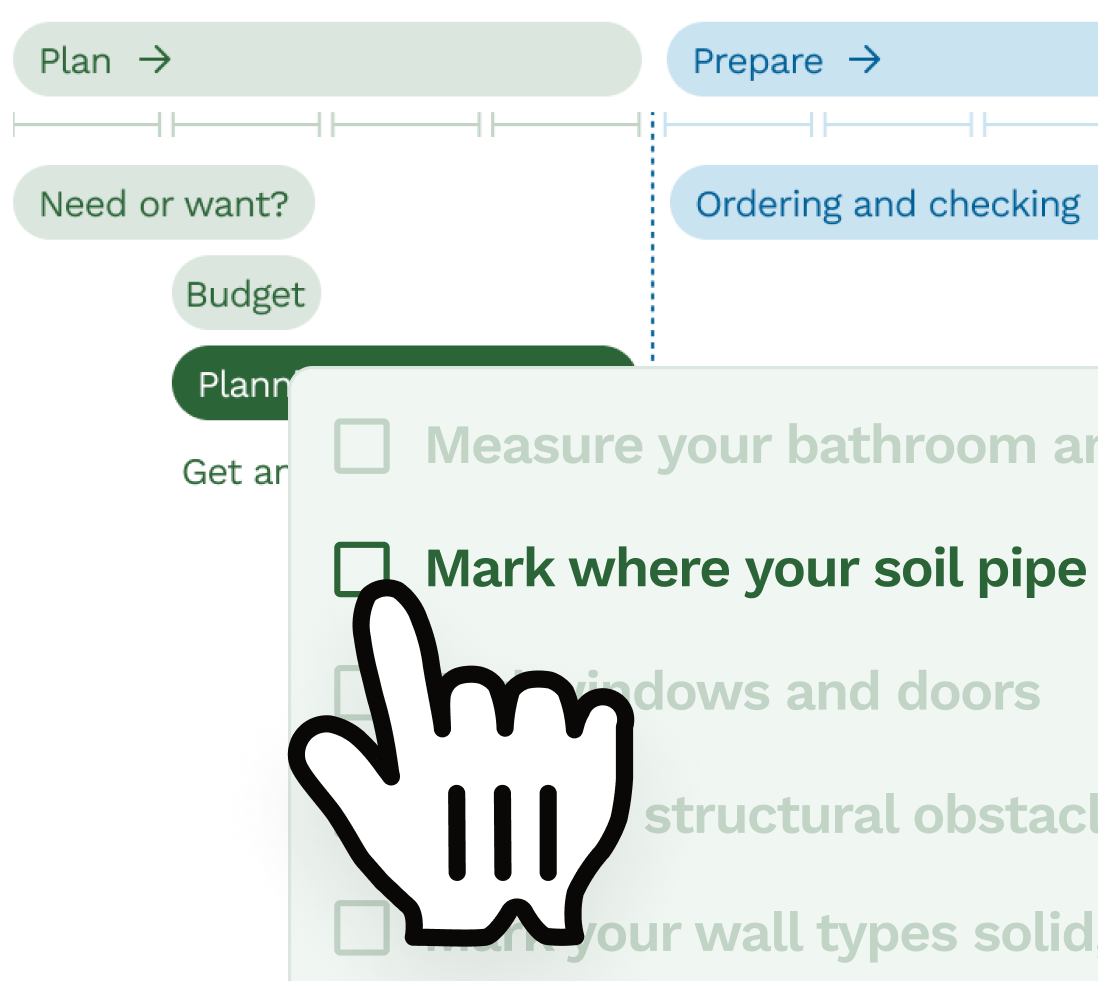
2. Understand the condition of the property
Before you plan too far, you need to understand what you are working with.
This is especially true if you are renovating an older property, buying a house to renovate, or opening up walls, floors or ceilings.
Depending on the project, you may need:
- A building survey
- Structural advice
- Damp or timber checks
- Roof checks
- Drainage checks
- Electrical inspection
- Heating or plumbing checks
There is no point planning expensive finishes if the roof, joists, wiring or pipework need attention first. Older homes in particular can hide problems until work starts.
3. Create a to-scale plan
A to-scale plan is one of the most useful things you can do early. It helps you understand what actually fits before anything is ordered or built.
Start by marking:
- Walls
- Windows
- Doors
- Ceiling heights
- Structural elements
- Chimney breasts
- Pipe boxing
- Soil pipe locations
- Radiators
- Existing sockets and switches
- Floor levels or awkward changes in level
Then start testing the layout.
This is where Reno starts. You can create plans room by room, add furniture, fixtures and fittings to the millimetre, work with wall elevations and start building the brief your trades will need.
It is much easier to move a toilet, island, sofa, shower screen or radiator on a plan than after someone has started cutting holes in walls.
Read more on what needs to be decided before first fix?

4. Work out what approvals you might need
Not every renovation needs planning permission. But that does not mean you can skip the checks.
Depending on the project, you may need to think about:
- Planning permission
- Permitted development
- Building regulations
- Party wall matters
- Listed building consent
- Conservation area restrictions
- Structural engineer input
- Building control sign-off
This is especially important if you are:
- Extending
- Converting a loft
- Removing or changing walls
- Changing the roof
- Creating a new bathroom
- Changing drainage
- Working near a shared wall
- Changing windows or external doors
- Renovating a listed or conservation property
Do this early. Permissions and approvals can affect the design, the budget, the order of work and how quickly you can start.
5. Set a realistic budget
A renovation budget is not just the cost of the things you can see.
It needs to include:
- Labour
- Materials
- Fixtures and fittings
- Professional fees
- Surveys
- Structural calculations
- Planning or building control fees
- Skips
- Delivery costs
- Temporary accommodation if needed
- Storage
- Contingency
Contingency is not optional. It is the bit that stops the whole project falling apart when something hidden turns up.
Also, try not to spend the contingency before work starts. It is tempting. Do not do it to yourself.

6. Decide what needs choosing before work starts
This is where renovation planning gets underestimated. A lot of things that feel like finishing decisions actually affect the build.
For example:
- Wall mounted taps affect pipework
- Concealed showers affect wall depth
- Wall hung toilets need frames and cistern space
- Kitchen appliance positions affect plumbing and electrics
- Lighting affects first fix wiring
- Sockets and switches need exact positions
- Towel rails and radiators affect pipework
- Shower niches need planning before walls are finished
- Floor finishes can affect thresholds and door clearances
If it has a component that goes inside a wall, floor or ceiling, it needs deciding before first fix.
7. Get enough detail before asking for quotes
You don't need to choose every product before requesting quotes. What matters is having enough detail that every trade is quoting for the same job.
Before asking for quotes, try to have:
- A layout
- Measurements
- What is staying and what is moving
- Known structural changes
- Key fixtures and fittings
- Appliance positions
- Lighting and electrical requirements
- Heating changes
- Finishes where known
- Who is supplying what
- Photos of the existing space
A clearer plan makes quotes easier to compare, and it helps avoid awkward conversations once work has started. The aim is not to become a professional designer overnight. It is to stop three trades quoting three different versions of the project!
8. Choose the right trades and agree the scope
The people you hire will shape the project. Recommendations are useful, but they are only one part of the decision.
When comparing trades, look at:
- Similar past projects
- References
- Reviews
- Communication style
- Availability
- Whether the quote is detailed
- Whether VAT is included
- Whether labour and materials are separated
- What is excluded
- Whether the quote is fixed or estimated
- Payment terms
If one quote is much cheaper than the others, check why. It might be a good deal. It might also be missing half the job.
Before work starts, make sure the agreement is written down. For small projects, that might be a clear written scope. For larger projects, it may mean a proper building contract.
At a basic level, the agreement should make clear:
- What work is being done
- How much it will cost
- When it is expected to happen
- Who is supplying what
- How changes will be priced
- How payments will work
- What happens if there are delays
Related reading: Should I hire trades or can I do it myself, Making a contract and How to work well with your trades
9. Plan the order of work
Every renovation is different, but the broad order usually looks something like this:
- Strip out and demolition
- Structural work
- Windows, doors or major openings
- First fix plumbing and electrics
- Heating and ventilation routes
- Insulation, boarding and plastering
- Flooring preparation
- Tiling or fitted finishes
- Second fix plumbing and electrics
- Fitted furniture or kitchen installation
- Decorating
- Snagging
A kitchen renovation has its own sequence because appliances, cabinets, worktops, plumbing and electrics are all connected. A bathroom needs even more careful early planning because plumbing, waterproofing, tiling, ventilation and small fixtures all affect each other.
The general rule is simple: hidden work first. Pretty work later.
Read more on what order to do what and when for a kitchen renovation and where to start planning a new bathroom.
10. Order materials earlier than feels normal
A lot of renovation delays come from things not arriving when they are needed, and unexpected lead times (tiles in particular can have a surprisingly long lead time!).
This can include:
- Tiles
- Sanitaryware
- Taps
- Shower valves
- Kitchen units
- Appliances
- Radiators
- Lighting
- Flooring
- Handles
- Trims
- Grout
- Paint
- Specialist fittings
Check returns policies just incase and make sure you check deliveries as soon as they arrive. Things can turn up:
- Damaged
- Incomplete
- In the wrong size
- In the wrong finish
- Without the parts needed for installation
If you are supplying items yourself, make sure your trade knows exactly what you have ordered, what is included and when it is arriving.
Planning a bathroom? Read more on the things to consider if you are supplying the sanitaryware.
11. Prepare the house before work starts
Renovation work spreads. Dust, tools, deliveries, access routes and storage usually affect more of the house than the room being worked on.
Before work starts:
- Clear the work area properly
- Empty cupboards and storage
- Protect floors through access routes
- Move fragile items
- Seal off rooms where possible
- Plan where materials will be stored
- Agree where tools can go
- Think about parking and access
- Keep pets and children away from work areas
- Decide how you will cook, wash or work if the project affects everyday rooms!
If you are living at home during the renovation, try to keep one area clean and usable. It will not make the renovation glamorous. It will make it slightly more survivable.
Related reading: Tips for surviving a bathroom renovation
12. Keep communication clear during the build
Even with a good plan, decisions will come up on site. Someone may ask:
- Exactly where does this switch go?
- Which way should the door open?
- Where should the tiles finish?
- Is this centred to the wall or the unit?
- Are we keeping this pipe boxing?
- Who is supplying the missing part?
The important thing is to keep decisions clear. Agree how you will communicate:
- Shared document
- Weekly check-in
- One main point of contact
For anything that affects cost, timing or scope, get it in writing.
If something changes, ask:
- What does this change?
- What does it cost?
- Does it affect the timeline?
- Does it affect anything already ordered?
- Does it affect another trade?
Small changes can be fine. Small changes that nobody tracks are where projects get messy.
Read more on how to work well with your trades.
13. Expect some flexibility
No renovation goes exactly to plan. That does not mean planning was pointless. It means the plan gives you something to adjust from.
You may discover old wiring, awkward pipework, damp, uneven floors, hidden structure or a product that does not quite work once the room is opened up.
The goal is not to avoid every surprise. The goal is to avoid the avoidable ones.
14. Finish with snagging
At the end of the project, do not rush straight into "done". Walk through the work carefully and make a snagging list.
Check things like:
- Doors and drawers opening properly
- Sealant and grout lines
- Paint touch-ups
- Sockets and switches working
- Lights and extractor fans working
- Plumbing connections aren't leaking
- Heating controls work
- Any damaged finishes
- Missing trims or covers
Snags are normal. The important thing is that they are recorded clearly and agreed before the final payment is made, depending on your contract or payment arrangement.
Things people do not think about early enough
- A simple layout change can affect plumbing, electrics and cost
- A builder cannot quote accurately from vague ideas
- Some finishing decisions need to be made before first fix
- Materials need checking as soon as they arrive
- A cheap quote is only useful if it covers the same work
- WhatsApp messages are not a renovation plan
- If you are supplying products, you are usually responsible for checking they fit and arrive complete
- You need to plan how you will live around the renovation, not just how the finished room will look

A simple start-to-finish renovation roadmap
If you want the short version, it looks like this:
- Work out what the renovation needs to achieve
- Check the condition of the property
- Create a to-scale plan
- Understand permissions and approvals
- Set the budget and contingency
- Decide what needs choosing before first fix
- Prepare a clear brief for quotes
- Choose trades and agree the scope
- Plan the order of work
- Order materials early
- Prepare the house
- Keep decisions and changes clear during the build
- Snag properly at the end
A renovation will never be completely tidy. But a clear plan makes it much easier to get quotes, communicate with trades, make decisions in the right order and avoid the moments where everyone realises too late that something important was never actually decided.
Frequently asked questions
What is the first step in planning a home renovation?
The first step is working out what you want the renovation to change. Before speaking to trades or choosing products, decide what is not working now, who uses the space, what needs to function better and which parts are needs rather than wants.
What order should you plan a renovation in?
A typical renovation starts with scope, surveys, plans, permissions and budget before moving into quotes, trades, ordering, strip out, structural work, first fix, plastering, second fix, decoration and snagging. The exact order depends on the project, especially for kitchens, bathrooms and whole-house renovations.
Do I need a plan before getting renovation quotes?
Yes. You do not need every product chosen, but you do need enough detail for trades to quote the same job. A layout, measurements, key fixtures, known structural changes, electrical needs and who is supplying what will make quotes much easier to compare.
What needs to be decided before first fix?
Anything hidden inside walls, floors or ceilings should be decided before first fix. This includes plumbing, electrics, lighting, sockets, switches, heating, ventilation, wall-mounted fittings, shower controls, niches and some fixture positions.
How much contingency should I allow for a renovation?
You should allow a healthy contingency for unexpected renovation costs. Older homes, structural work and projects with lots of unknowns usually need more breathing room because issues like old wiring, damp, uneven floors, pipework or rotten joists may only appear once work starts.
What causes delays in a home renovation?
Common renovation delays include late decisions, missing materials, damaged deliveries, unclear quotes, changes during the build, approval issues and unexpected problems found after strip out. Ordering early, checking deliveries and making first-fix decisions in advance can reduce avoidable delays.
Should I order renovation materials before work starts?
Major items should usually be chosen and ordered earlier than feels normal, especially anything with a lead time or needed for first fix. Tiles, sanitaryware, taps, shower valves, kitchen units, appliances, radiators, lighting and flooring can all delay work if they arrive late or incomplete.
How do I keep a renovation project organised?
Keep the layout, brief, quotes, product choices, delivery dates and decisions in one place where possible. Agree how you will communicate with trades, keep cost or scope changes in writing, and use the plan as the shared reference throughout the project.
Renovating? Read more...
All rooms
What needs to be decided before first fix?
Pipes and cables are installed inside walls and floors, so changes become expensive and disruptive.
All rooms
How do I find good trades for my project?
Start with recommendations where possible, then compare reviews, communication, detail and pricing clarity.
All rooms
Making a Contract
Scott Batty explains why building contracts matter, what they should cover, and how they can be easily created without expensive legal input and unnecessarily complex jargon.
All rooms
How to budget for a home renovation
A practical guide to building a renovation budget from the scope, plan, quantities, quotes and contingency rather than guesswork.
All rooms
Why an accurate floor plan matters so much in a renovation
Why accurate plans matter for quotes, layouts, wall details, first fix decisions and quantities before work starts.
All rooms
Renovation mistakes to avoid before starting your home project
A practical guide to common renovation mistakes, from vague quotes and missed first fix decisions to product fit, quantities and change tracking.
Free tools to get started

Join our mailing list and get 10% off
Who are you? *
By signing up, you are agreeing to our Terms and Privacy Policy including receiving emails from us at Reno (you can unsubscribe at any time). Opted out but want back in? Re-subscribe to the mailing list .
Start your renovation with Reno