Help & advice
Renovation mistakes to avoid before starting your home project
Last updated: June 26, 2026
Renovation mistakes don't start with one huge disaster normally. They start with small bits and pieces of decisions that get missed or assumed and it all adds up making for a stressful, expensive and generally unhappy time (and that's exactly what we all want to avoid!).
A vague quote. A thing you did not know you needed to choose until it needed to be bought like, yesterday. A conversation everyone remembers slightly differently...
The most common mistakes people make during a renovation project are totally avoidable but only if you know they are coming.
That said, you will still uncover unavoidable surprises (that's where your contingency comes in) like rotten joists, the need to rewire, untreated damp, bad plaster or something strange a previous owner did 20 years ago for reasons known only to them.
The rest you can avoid by making enough of the predictable decisions early so the project has something solid to work from. So here's our list, from the Reno team's experience, of the mistakes to avoid.
1. Getting (and accepting) quotes before the plan is clear
This is one of the biggest renovation mistakes in our experience. Committing to a quote while your plan is still a bit up in the air.
It's a good thing to speak to a few builders or trades while you work out what is possible and what you can afford. You describe the project. You show some photos. Everyone seems to understand.
But the quotes come back and they are impossible to compare.
One is a WhatsApp message.
One is a spreadsheet.
One is a single number.
One includes some materials.
One doesn't mention a skip or waste.
One assumes like-for-like replacements.
One assumes half the layout is changing because you had an idea when talking to change something up.
Nobody is necessarily being difficult. They are just quoting different versions of the job. This is why you really need to have a plan to quote from. Chances are you'll also have more success in getting time from different trades to quote too when they see you are serious (they are busy people!).
Before asking for quotes, aim to have:
- a measured layout
- what is staying and what is moving
- the fixtures and fittings you want
- electrical requirements
- plumbing changes
- finishes where known
- what you are supplying
- what you expect the trade to supply
- any known assumptions or exclusions
A clearer plan makes quotes easier to get and compare.
It also makes the relationship with your builder or trade less tense, because fewer things are left to interpretation.
Looking to find trades for your project? Read more on how do I find good trades for my project?

2. Not building a budget from the actual plan
A renovation budget should not just be a number you hope the project fits inside.
It should come from the actual work you are planning.
That means understanding:
- what rooms are being renovated
- whether layouts are changing
- whether plumbing is moving
- whether electrics are being added or changed
- what fixtures and fittings are included
- what finishes you want
- who is supplying what
- what condition the property is in
- what is included in the quote
- what is excluded from the quote
This is where budgets often go wrong.
People budget for the visible things, like tiles, taps, paint and flooring, but forget the work that makes those things possible.
- Plumbing
- Electrics
- Plastering
- Sub-floor repairs
- Waste removal
- Boxing
- Trims
- Fixings
- Extra labour because the room is awkward
A budget built from a clear plan has a much better chance!
Read more on how to budget for a home renovation.
3. Treating contingency as spare money
The contingency is there for the things you cannot fully predict before work starts:
- rotten joists
- old wiring
- damp
- bad plaster
- damaged pipework
- hidden leaks
- unexpected structural issues
- previous work that was done badly
As a rough guide, many UK renovation sources suggest allowing around 10 to 15% contingency for unexpected costs. For older homes, structural work or projects with more unknowns, 15 to 20% may be more realistic.
But contingency should sit on top of a clear plan and quote.
It should not replace them.
If your contingency has already disappeared into upgraded taps, handmade tiles or extra wall lights before the first wall is opened up, it is not really contingency anymore.
A better approach is:
- plan as much as you reasonably can
- get quotes from a clear brief
- include contingency for genuine unknowns
- track changes as the project moves
- do not spend the contingency before the project has properly started
Contingency helps with surprises.
It should not be used to cover decisions that could have been made earlier.
Read more on how to budget for a home renovation

4. Starting work without a clear agreement or contract
Ok, a renovation contract sounds formal. But really, it is just a clear agreement about what is being done, how much it will cost and when it should happen:
- what work is included
- what work is excluded
- what drawings or plans are being used
- what specification is being priced
- what the agreed cost is
- how payments are staged
- when work is expected to start
- when work is expected to finish
- how delays will be handled
- how changes will be priced and agreed
- what happens if defects appear after completion
This matters because most renovation disagreements do not start with someone being dishonest. They start with assumptions.
For a small project, the agreement might be fairly simple. For a larger or more complex project, it may need to be a proper building contract.
Either way, you want the basics written down before work starts!
Your floor plans, wall elevations, specifications, product choices and notes all help explain what the agreement is based on.
Read more on making a contract.
5. Thinking "new bathroom" is enough detail
A "new bathroom" can mean a lot of different things.
It could mean replacing the suite like for like.
It could mean moving the toilet, fitting a concealed shower, adding a wall-hung vanity, replacing rotten flooring, full-height tiling, new electrics and a tiled bath panel.
Those are not the same job.
The details matter because they affect:
- labour
- materials
- plumbing
- electrics
- wall build-up
- tiling
- waterproofing
- timescales
- cost
This is why Reno starts with the plan.
The more clearly you can show the layout, wall elevations, fixtures, finishes and decisions, the easier it is for someone to understand what the job actually is.
Planning a bathroom? Read our guide on where to start planning a new bathroom.
6. Not deciding enough before first fix
First fix is where a lot of hidden work happens.
Plumbing, electrics, heating pipework, ventilation and back boxes usually go in before walls, floors and ceilings are closed up.
That means some decisions need to be made earlier than people expect.
For example:
- where the toilet goes
- where the shower valve goes
- whether taps are wall-mounted
- where sockets and switches go
- where wall lights go
- where the extractor fan goes
- where towel rails and radiators go
- whether you need supports for wall-mounted items
- whether you are adding niches or recessed storage
If these decisions are not made early, changing them later can mean undoing finished work - nobody enjoys paying to open up a freshly plastered wall.
Read more on what needs to be decided before first fix.
7. Forgetting the boring bits, and who is responsible for supplying them
A lot of the "things" you need to buy for a renovation are not just one thing.
For example, you don't just have to buy a wall-hung toilet to have a wall-hung toilet.
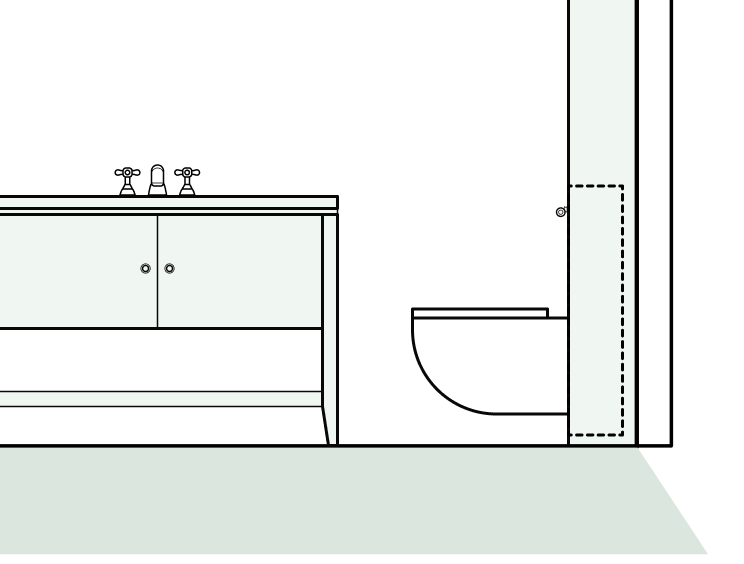
It will need:
- a concealed wall-hung toilet frame
- a concealed cistern
- a flush plate or handle, button
- waste connections
- boxing or a false wall / half wall / pony wall
- suitable wall structure to support the bolts from the frame
- some plan for access for maintenance
- the actual compatible toilet pan and seat
A freestanding bath might need a waste, trap, overflow, feet, pipework routes and possibly floor-mounted taps.
A concealed shower will need the valve and pipework in the right place before the wall is closed.
These are not the exciting "add to basket now!" decisions, which is exactly why they get missed.
This is also where supply responsibility gets confusing. If you are buying fixtures and fittings yourself, you need to know what that really means. Are you responsible for:
- choosing the product
- checking dimensions
- checking compatibility
- checking what parts are included
- ordering on time
- receiving the delivery
- checking for damage
- storing it safely
- arranging returns
- replacing missing parts
If you are supplying fixtures and fittings yourself, check what is included before anything arrives on site. If the trade is supplying, ask what is included and what level of product is allowed for.
Neither option is wrong. You just need to agree it clearly so no one gets caught short: ending up with trades waiting, missing parts, emergency orders and awkward “I thought that came with it” conversations, usually followed by a slightly frantic trip to your local DIY store.
Sound familiar? Read more on the things to consider if you are supplying the sanitaryware.
8. Assuming pipes and cables will be hidden unless you discuss it first
If something matters to you, say so as early as possible. Don't assume anyone will know what finish you have in mind.
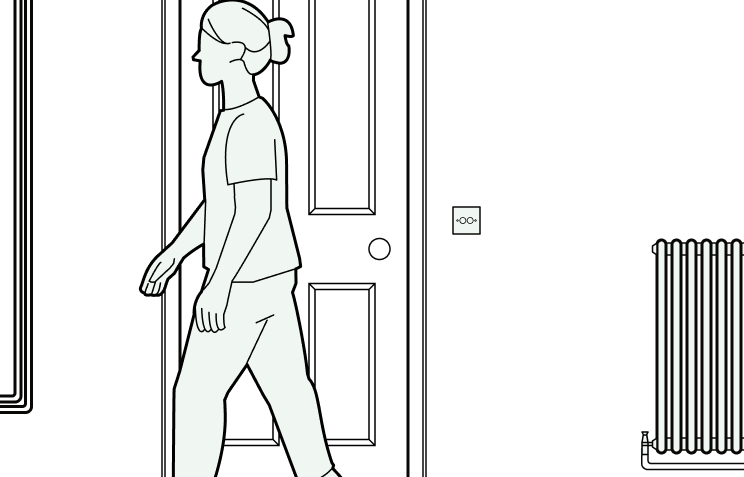
For example, if you do not want central heating pipes mounted visibly on newly plastered walls, that needs to be discussed before the work starts.
Sometimes there is a good reason for a visible route.
Sometimes hiding pipework means more work, more cost or more disruption.
But it is much better to have that conversation before the wall is finished!
Your plan should show or explain:
- pipe routes where relevant
- radiator positions
- towel rail positions
- boxing
- exposed or concealed fittings
- sockets and switches
- visible controls
- anything you do not want left on show
The goal is not to micromanage everything but to make sure the things you care about are actually known / said.
9. Leaving tile edges until someone is already tiling (oops)
Tile edging is one of those details people often do not think about until too late.
Then you get whatever is on the van.
Sometimes that is fine.
Sometimes it is a mismatched builder-grade trim that sits next to expensive tiles forever, quietly annoying you every time you brush your teeth.
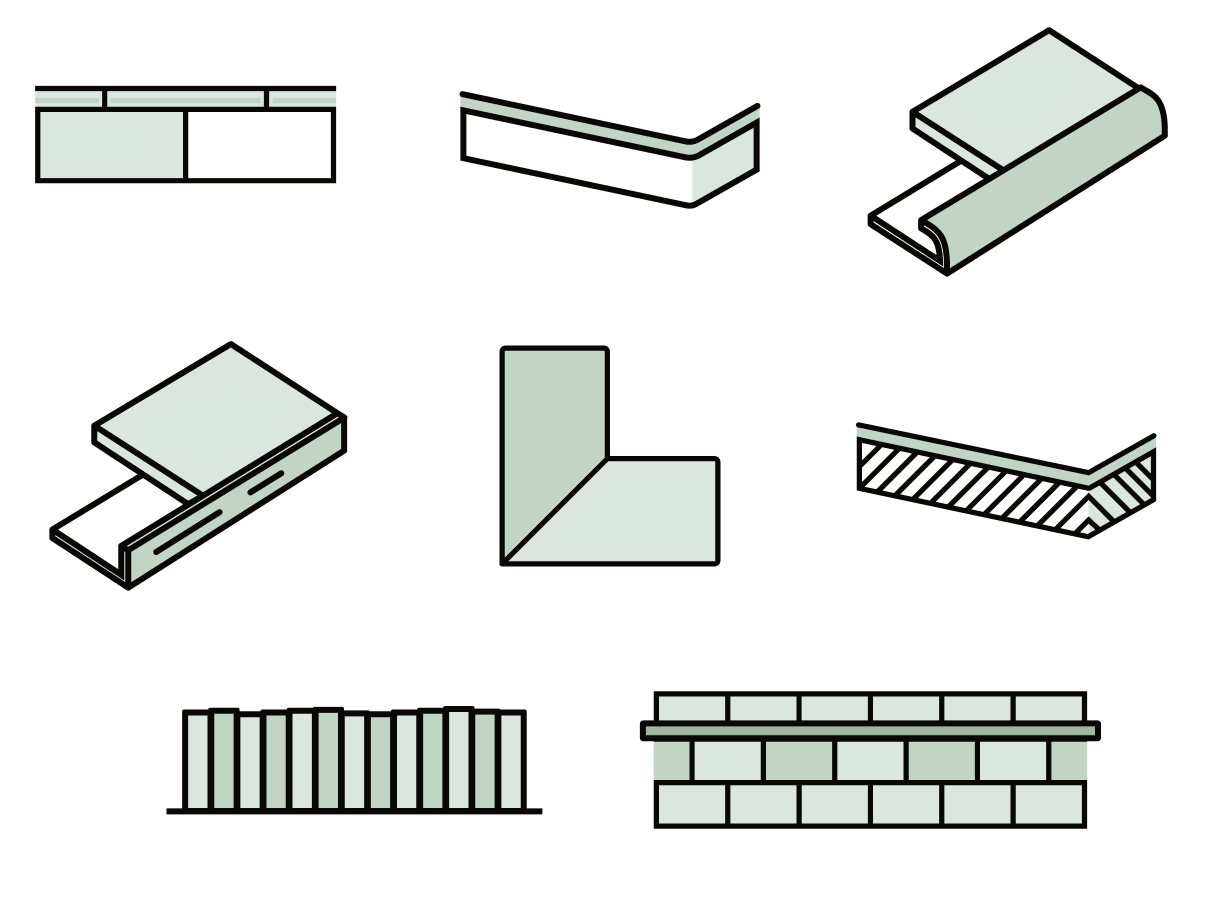
Before tiling starts, think about:
- where the tiles stop
- whether edges need trims
- what colour the trims should be
- whether trims should match brassware, chrome, black or tile colour
- whether external corners need mitred edges
- whether tile edges meet painted walls, panels or plaster
- how niches, bath panels and half-height tiling will finish
This is where wall elevations help.
A floor plan will not always show these decisions. An elevation can.
10. Not planning the walls
A renovation plan is not just the top down floor plan / layout. Loads of the important decisions happen on the walls and are the things you notice when you look around the room.
Wall plans cover:
- tiles
- paint colours
- splashbacks
- panelling
- dado rails
- coving
- cornicing
- sockets
- switches
- wall lights
- mirrors
- shelves
- cabinets
- radiators
- towel rails
- ... and anything else you are hoping to fix or attach to the wall!
If you only plan from above, you can miss the things people will actually see and use every day.
Wall elevations as well as floor plans created on Reno update one another, so you can show what is happening on each wall alongside your top down plan.
That matters when you want to tile only part of a wall, paint a specific area, add panelling, line up a mirror, position a socket or explain where something should finish.
11. Underestimating sockets, switches and lighting
Sockets and switches are easy to overlook because they feel small.
They are not small once the walls are plastered.
Think about where you will actually use things:
- phone chargers
- bedside lamps
- kitchen appliances
- toothbrush chargers
- shaver sockets
- mirrors
- extractor fans
- desk lamps
- floor lamps
- TVs
- routers
- speakers
- heated towel rails
- underfloor heating controls
A socket in the wrong place can be annoying for years.
Planning electrics? Read where do you want the light switches and where to put plug sockets in a living room, bedroom and kitchen.
12. Choosing finishes without checking quantities
Paint and tiles can look simple until you start working out how much you actually need.
A tile decision is not just the tile.
It is also:
- coverage
- tile size
- pattern
- waste allowance
- grout colour
- trim
- where the tiles stop
- how the edges finish
Paint is similar.
You need to know:
- which walls are painted
- whether the ceiling is painted
- whether woodwork is included
- whether different colours are used
- whether panelling or coving changes the areas
Reno calculates quantities from the plan, including room square meterage, paint coverage and tile coverage.
This helps you understand the cost of your choices before you order too little, too much or the wrong thing.
13. Not checking whether products actually fit
It is very easy to fall in love with a product before checking whether it works in your room.
Common examples:
- a vanity that blocks the toilet
- a freestanding bath without enough space around it
- a shower screen that clashes with a basin
- a fridge door that cannot open properly to let you move the shelves around
- a dining table that leaves no room to walk around it when people are seated
- a wall-hung toilet without enough wall depth for the frame
- a cabinet door that hits a light fitting
- a radiator where furniture needs to go
This is where scale matters.
If something only works when the plan is not accurate, it does not work.
Get the dimensions you need for space around items here: Dimensions and understanding the space needed in your kitchen and in your bathroom.
14. Treating structural issues as someone else's problem
Cracks, damp, rotten timber, sagging floors and suspicious stains are not just cosmetic.
Before starting work, especially in an older home, make sure you understand the condition of the property.
Depending on the project, you may need:
- a building survey
- structural engineer advice
- damp checks
- roof checks
- drainage checks
- electrical checks
- plumbing or heating checks
There is no point spending your budget on finishes if the floor, roof, wiring or structure needs attention first.
15. Forgetting permissions, approvals and regulations
Not every renovation needs planning permission.
But you should not assume yours does not.
Depending on the work, you may need to think about:
- planning permission
- permitted development
- building regulations
- building control
- party wall matters
- listed building consent
- conservation area restrictions
- electrical certification
- structural calculations
This is especially important if you are removing walls, extending, converting a loft, adding a bathroom, changing drainage or working near a boundary.
Check with a professional early.
It is much easier to adjust a plan before work starts than after someone has told you the work should not have happened.
Read more on how to plan a home renovation from start to finish.
16. Relying on memory instead of tracking decisions and changes
Renovations creates SO many decisions to keep in your head.
You might remember one conversation.
Your builder might remember another.
Your partner may have heard a third version.
The electrician might only have seen a photo.
Then something changes - you might upgrade a tile, move a socket, swap a vanity, add a wall light, change a radiator or decide to tile more of the room.
The problem is not the fact something has changed, it's just that we're often not very good at checking what that change effects. Does this change:
- cost
- timing
- materials
- labour
- other trades
- anything already ordered
- the original quote
This is how mistakes happen and where relationships can get a bit tense. If nobody knows whether something was included, every change feels like an argument waiting to happen. A shared plan gives everyone a reference point:
- the latest layout
- what has changed
- what is decided
- what is still open
- what needs pricing
- what needs ordering
- what affects first fix
WhatsApp is useful for quick messages but it is not a renovation plan!
It's not that a clear brief and quote stop changes, it just makes them a whole lot easier to discuss.
Read more: How to work well with your trades.
How Reno helps avoid these mistakes
Reno was built because we experienced these problems ourselves.
We did not always know what we needed to specify.
We did not always know which details mattered until they had already become expensive, awkward or annoying.
Reno is designed to help you catch more of those decisions earlier.
Reno helps you:
- create accurate 2D plans to scale
- work with wall elevations
- add fixtures, fittings and furniture to scale
- plan sockets, switches, lights and radiators
- show tiles, panels, splashbacks and finishes
- calculate paint and tile coverage
- build clearer briefs and shopping lists
- keep decisions connected to the plan
- share plans with trades, designers or customers
- get quotes based on better information
It will not remove every surprise from a renovation.
Not possible - sorry!
But it can definitely reduce the avoidable mistakes, the assumptions and the "I thought you meant..." moments. And that is where a lot of renovation stress starts.
Frequently asked questions
What is the biggest mistake people make when renovating?
One of the biggest renovation mistakes is starting with a vague plan. If the layout, fixtures, finishes, electrics, plumbing, budget and supply responsibilities are unclear, quotes become hard to compare and decisions are more likely to be made too late.
What should I decide before starting a renovation?
Before starting a renovation, decide the layout, what is staying and moving, key fixtures and fittings, socket and switch positions, lighting, heating, finishes, who is supplying what, what needs to be chosen before first fix and how changes will be agreed.
Why are renovation quotes so different?
Renovation quotes are often different because trades are not pricing the same scope. One quote may include waste removal, full-height tiling or new electrics, while another may not. A clearer plan and brief helps make quotes easier to compare.
How can I avoid going over budget on a renovation?
Start with a clear scope, create an accurate plan, get comparable quotes from the same brief and include contingency for genuine unknowns. Many budget problems come from late decisions, unclear assumptions, missing details and changes that were not agreed clearly.
How much contingency should I include in a renovation budget?
As a rough guide, allow around 10 to 15% contingency for unexpected renovation costs. For older homes, structural work or projects with more unknowns, 15 to 20% may be more realistic. Contingency should sit on top of a clear plan and quote, not replace proper planning.
Do I need a contract for a home renovation?
Yes, it is sensible to have a written agreement before renovation work starts. For a small job, this may be a written scope, price and timescale. For larger projects, a formal building contract can help clarify what is included, how payments work, how delays are handled and how changes are agreed.
What details do people forget in a bathroom renovation?
Commonly forgotten bathroom details include tile edging, waste and traps, shower valves, wall-hung toilet frames, extractor fan position, towel rail location, socket or shaver point positions, niche sizes, tile coverage and who is supplying each item.
How does Reno help avoid renovation mistakes?
Reno helps by keeping the plan, elevations, fixtures, finishes, electrics, quantities and brief connected. This makes it easier to spot missing decisions early, explain the work clearly and get quotes based on the same information.
Related articles
All rooms
How to plan a home renovation project from start to finish
A start-to-finish renovation planning guide covering surveys, scaled plans, approvals, quotes, ordering, communication and snagging.
All rooms
How to budget for a home renovation
A practical guide to building a renovation budget from the scope, plan, quantities, quotes and contingency rather than guesswork.
All rooms
What needs to be decided before first fix?
Pipes and cables are installed inside walls and floors, so changes become expensive and disruptive.
All rooms
Why an accurate floor plan matters so much in a renovation
Why accurate plans matter for quotes, layouts, wall details, first fix decisions and quantities before work starts.
All rooms
What certificates do I need for a UK home renovation?
The certificates and approvals a UK home renovation can trigger, from electrical and gas certificates to building control and party wall agreements.
Free tools to get started

Join our mailing list and get 10% off
Who are you? *
By signing up, you are agreeing to our Terms and Privacy Policy including receiving emails from us at Reno (you can unsubscribe at any time). Opted out but want back in? Re-subscribe to the mailing list .
Start your renovation with Reno