Help & advice
How to plan a home renovation in 2026: Key steps and advice
Last updated: June 25, 2026
Planning a renovation properly is not known as the 'fun bit'.
BUT it is the bit that makes everything else less painful!
Before you start choosing tiles, worktops, paint colours or taps, you need to understand what you are trying to change, what it will affect, who needs to be involved and what needs deciding before work starts.
Most renovation stress comes from things being decided too late.
Not because people did not care. More because they did not know the decision was coming.
Start with what you actually want to achieve
Before you get into quotes, products or Pinterest boards, work out what the renovation needs to do.
Ask yourself:
- What is not working now?
- Who uses the space?
- What needs to change day to day?
- Are you renovating for yourself or to add value?
- Is this a cosmetic update or a bigger layout change?
There is a big difference between refreshing a room and changing how a home works.
A bathroom refit, a kitchen extension, a loft conversion and a whole-house renovation all need different levels of planning.
The earlier you are honest about the scope, the easier everything else becomes.
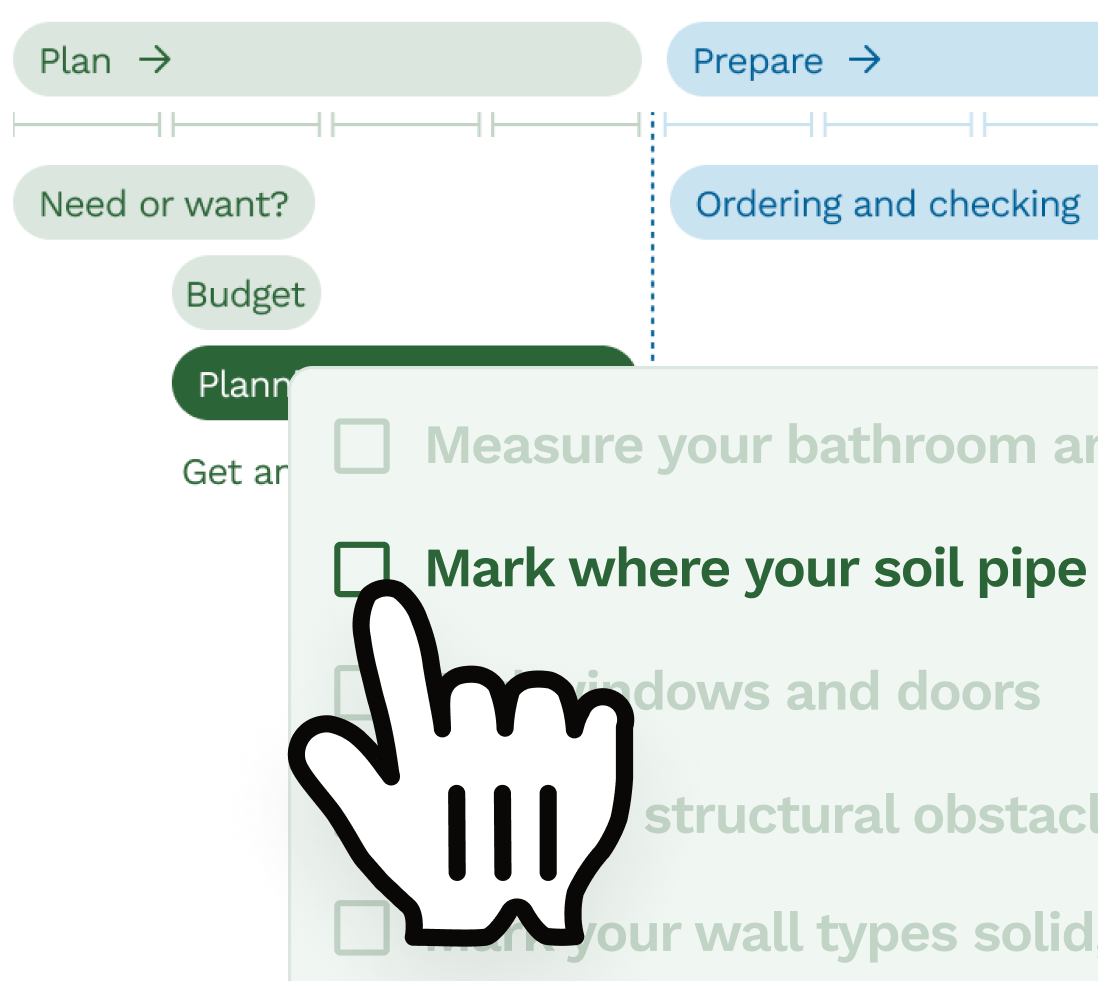
Make a plan before you ask for quotes
You do not need every tiny decision made before speaking to trades.
But you do need enough detail that everyone is quoting the same thing.
A vague brief like "new bathroom" or "open up the kitchen" leaves too much room for interpretation.
Before getting quotes, try to have:
- A detailed layout
- What is staying and what is moving
- Any structural changes
- Key fixtures, fittings or appliances
- Electrical requirements
- Heating changes
- Any known constraints
- Photos and measurements
The aim is not to become an architect overnight.
It is to give trades enough information to price the same job, not three different versions of what they think you might mean.
A clear plan also helps later if you move into a formal contract. Drawings, specifications and schedules of work are often the documents that define exactly what is being priced and built.
Read more on What should be in a building contract? What needs to be decided before first fix? and How do I find good trades for my project?
Create a to-scale plan
A to-scale plan is one of the most useful things you can do early.
It helps you understand:
- What actually fits
- Where doors swing
- Whether furniture blocks movement
- Where sockets, switches and radiators need to go
- What might affect plumbing or electrics
- Whether your layout feels realistic before anything is built
This is where Reno comes in.
You can create a plan room by room, add the items you are thinking about using to the millimetre, test different layouts and start building the brief your trades will need.
It is much easier to move something on a plan than after first fix.
Related reading: Where should the TV go?, Where do you want the light switches? and Where do you want the radiators?

Understand what permissions and approvals might apply
Not every renovation needs planning permission.
Some work can fall under permitted development, depending on the property, location and type of work. But you should not assume.
You may need to check:
- Planning permission
- Permitted development rights
- Building regulations
- Party wall requirements
- Listed building consent
- Conservation area restrictions
- Structural engineer input
This is especially important if you are:
- Extending
- Removing or changing walls
- Changing the roof
- Adding a loft conversion
- Changing drainage
- Working near a shared wall or boundary
- Creating a new bathroom or utility space
If in doubt, check early with your local authority, architect, structural engineer or building control.
It is much better to find out before work starts.
Work out your budget properly
A renovation budget is not just the cost of the visible things.
It needs to include:
- Labour
- Materials
- Fixtures and fittings
- Professional fees
- Surveys
- Structural calculations
- Planning or building control fees
- Skip hire
- Delivery costs
- Temporary accommodation if needed
- Contingency
And yes, contingency really matters.
Older homes especially have a habit of revealing things once walls, floors or ceilings are opened up.
A healthy contingency gives you room for:
- Rotten joists
- Old pipework
- Electrical upgrades
- Damp issues
- Uneven floors
- Material price changes
- Decisions you genuinely could not make until work started
Try not to spend your contingency before the work has even begun! Check out detailed example projects planned on Reno.

Decide what needs to be chosen early
Some decisions feel like finishing details, but they are not.
For example:
- Wall mounted taps affect pipework
- Concealed showers affect wall depth
- Wall hung toilets need frames
- Kitchen appliance positions affect electrics and plumbing
- Lighting affects first fix wiring
- Floor finishes affect door clearances and thresholds
This is where people get caught out.
By the time the room is plastered, tiled or decorated, your options are much more limited.
Read more on what needs to be decided before first fix.
Think about the order of work
Every renovation is slightly different, but most follow a similar pattern.
Usually, the order looks something like:
- Strip out and demolition
- Structural work
- First fix plumbing and electrics
- Windows, doors or major openings
- Insulation, boarding and plastering
- Flooring preparation
- Tiling or fitted finishes
- Second fix plumbing and electrics
- Decoration
- Snagging
The exact order depends on the project.
A bathroom, kitchen, loft conversion and extension will all have different details, but the principle is the same.
The hidden work comes before the pretty work.
Read more on what order to do what and when for a kitchen renovation and where to start planning a new bathroom.
Order materials earlier than feels normal
A lot of renovation delays come from things not arriving when they are needed.
Tiles, bathroom fittings, kitchen units, worktops, radiators, lights and flooring can all have lead times.
You also need time to check deliveries.
Things arrive:
- Damaged
- Missing parts
- In the wrong size
- In the wrong finish
- Later than promised
If you are supplying items yourself, make sure your trade knows exactly what you are ordering.
Some items need to be on site much earlier than you expect, especially anything needed for first fix.
Choose trades carefully
The people you hire will shape the project.
Before you get too far, it is worth asking whether the work is something you should be doing yourself at all.
Some jobs are realistic DIY. Others need proper trades, certification or building control.
Read more on whether you should hire trades or can do it yourself.
Recommendations from people you trust are usually the best starting point.
When comparing trades, look at:
- Similar past projects
- Reviews and references
- Communication style
- Availability
- Whether the quote is detailed
- Whether VAT is included
- Whether materials and labour are separated
- Whether it is an estimate or fixed price
- Payment terms
A good quote should make clear what is included and what is not.
If one quote is much cheaper than the others, make sure you understand why.
Get the agreement in writing
This does not need to feel dramatic.
It is just about making sure everyone understands what has been agreed before work starts.
At a basic level, the agreement should answer:
- What work is being done?
- How much will it cost?
- When is it expected to be finished?
For small jobs, this might be a clear written scope and payment agreement.
For larger projects, it may be a formal building contract using a standard template.
You want written confirmation of:
- Scope of work
- Drawings, specifications or schedule of works
- Payment stages
- Start date
- Expected timeline
- Who is buying what
- What happens if something changes
- How variations will be priced
- How delays will be handled
- How you will communicate
Avoid paying large sums upfront.
A deposit can be normal, especially where materials need to be ordered, but payments should usually be linked to clear stages of progress.
Read more on what should be in a building contract and how to work well with your trades.
Prepare your home before work starts
Renovation work spreads.
Dust, tools, boxes, deliveries and people moving in and out all affect more than the room being worked on.
Before work starts:
- Clear the work area properly
- Protect floors through access routes
- Move fragile or valuable items
- Work out where materials will be stored
- Think about where trades can park
- Agree access
- Set up temporary cooking or washing arrangements if needed
- Keep children and pets away from work areas
If you are living at home during the work, try to keep at least one area clean and usable.
Read more on tips for surviving a bathroom renovation and renovating during a heatwave.
Keep communication simple
Agree how you are going to communicate before work starts.
That might be:
- A shared document
- A weekly check-in
- One main point of contact
Try to keep decisions in writing, especially if they affect cost, timing or scope.
Verbal conversations are useful, but they are easy to forget when there are lots of decisions happening quickly.
If something changes, ask:
- What does this change?
- What does it cost?
- Does it affect the timeline?
- Does it affect anything already ordered?
- Does it affect another trade?
Related reading: How to work well with your trades
Be ready for decisions on site
Even with a good plan, there will be moments where someone asks:
- Where exactly do you want this switch?
- Which way should the door open?
- Where is the towel rail going?
- Is this socket centred to the unit or the wall?
- Do you want the tiles to finish here or there?
This is why planning early helps.
The more decisions you can make before the work starts, the less likely you are to make expensive choices under pressure.
Read more on where do you want the light switches and where should towel rails, hooks and toilet roll holders go.
Things people do not think about
- A layout change can affect plumbing, electrics, flooring and cost
- Some finishing decisions need to be made before first fix
- Materials need checking as soon as they arrive
- Your builder cannot quote accurately from vague ideas
- Older homes usually need more contingency
- A cheap quote is only useful if it covers the same work
- Every change during the build should be discussed in terms of cost and time
- You need somewhere to live, cook, wash or work while parts of the house are unusable!
Planning properly makes the rest easier
A renovation will never be completely stress-free.
But a clear plan makes it much easier to get quotes, make decisions, communicate with trades and avoid the avoidable mistakes.
Start with what the home needs to do.
Create a plan.
Understand the approvals.
Choose trades carefully.
Get the details written down.
Then keep using the plan as the project moves from idea to quote to build.
Frequently asked questions
What is the first step in planning a home renovation?
The first step is working out what you actually want the renovation to change. Before looking at finishes or getting quotes, decide what is not working now, who uses the space, what needs to function better and whether the project is cosmetic or more structural.
Do you need a plan before asking builders for quotes?
Yes. You do not need every detail decided, but you need enough of a plan for builders to price the same work. A layout, key measurements, known structural changes, fixtures, fittings and electrical requirements will make quotes much easier to compare.
What should be decided before first fix?
Anything hidden inside walls, floors or ceilings should be decided before first fix. This includes plumbing, electrics, lighting, socket positions, heating pipework, ventilation, wall-mounted fittings and anything that affects the layout.
Do I need planning permission for a renovation?
Not always. Some renovation work can fall under permitted development, but it depends on the property, location and type of work. Extensions, roof changes, structural work, listed buildings and conservation areas may need extra checks before work starts.
How much contingency should you allow for a renovation?
A renovation budget should include a healthy contingency for unexpected costs. Older homes especially can reveal issues once work begins, such as old pipework, rotten joists, damp, uneven floors or electrical upgrades.
How do you choose the right trades for a renovation?
Start with recommendations where possible, then check reviews, similar past projects, communication style and whether the quote is detailed. A good quote should clearly show what is included, what is excluded, how payments work and whether VAT is included.
Should you do renovation work yourself or hire trades?
It depends on your skills, time and the complexity of the work. Simple decorating or preparation may be realistic DIY, but structural work, electrics, plumbing, wet rooms and anything needing certification usually needs professional help.
What causes renovation delays?
Common renovation delays include late decisions, missing materials, unclear plans, damaged deliveries, changes during the build and unexpected issues found once walls or floors are opened up. Planning decisions early and checking deliveries as they arrive helps reduce avoidable delays.
Renovating? Read more...
All rooms
What needs to be decided before first fix?
Pipes and cables are installed inside walls and floors, so changes become expensive and disruptive.
All rooms
How do I find good trades for my project?
Start with recommendations where possible, then compare reviews, communication, detail and pricing clarity.
All rooms
Should I hire trades or can I do it myself?
A useful reality check on which jobs are realistic DIY and which ones need proper trades.
All rooms
How to work well with your trades
A practical guide to communication, planning decisions and keeping a renovation moving smoothly.
All rooms
Making a Contract
Scott Batty explains why building contracts matter, what they should cover, and how they can be easily created without expensive legal input and unnecessarily complex jargon.
Bathroom
Where to start planning a new bathroom
What is the to do list? What should I work out first, what comes later?
Kitchen
What order to do what and when for a kitchen renovation
Where to start, the decisions to make in what order and what to expect when it comes to the work to complete your kitchen renovation.
All rooms
How to plan a home renovation project from start to finish
A start-to-finish renovation planning guide covering surveys, scaled plans, approvals, quotes, ordering, communication and snagging.
All rooms
How to budget for a home renovation
A practical guide to building a renovation budget from the scope, plan, quantities, quotes and contingency rather than guesswork.
All rooms
Why an accurate floor plan matters so much in a renovation
Why accurate plans matter for quotes, layouts, wall details, first fix decisions and quantities before work starts.
All rooms
What certificates do I need for a UK home renovation?
The certificates and approvals a UK home renovation can trigger, from electrical and gas certificates to building control and party wall agreements.
Free tools to get started

Join our mailing list and get 10% off
Who are you? *
By signing up, you are agreeing to our Terms and Privacy Policy including receiving emails from us at Reno (you can unsubscribe at any time). Opted out but want back in? Re-subscribe to the mailing list .
Start your renovation with Reno